Author: Jeroen

Stefania Milan & Lonneke van der Velden @The Subversion of Big Data

Both Stefania Milan and Lonneke van der Velden participated in a panel session at the Subversion of Big Data – Cultures, Discourses and Practices of Big Data in Social Movements Contexts. This seminar is part of the Social Movements and Media Technologies: Present Challenges and Future Developments Seminar Series which took place in Florance at the 17th and 18th of November 2016.

The panels being, respectively:

  1. Activists’ data cultures in the understanding of big data

For a long time now activists have managed different types of social data for
civic purposes in the context of their mobilizations. In doing this, they devel-
oped different attitudes and beliefs towards data, including what citizens can
do with them and to what extent they can be embedded into social movement
activities. This panel looks at big data through the lenses of different activists’
data cultures in order to put the emergence of big data, and their integration
within activists’ repertoires of contention, into an historical and cultural per-
spective.

2. Social practices related to big data in activists’ contexts

Activists are not just passive producers of data when they mobilize. On the
contrary, they often consciously engage in social practices that include the
gathering, analyzing, and visualizing of big data in the context of their activist
projects. This panel discusses such social practices related to the use of big
data in the broad framework of social movements. The aim is to unveil the lib-
eration potential of big data for citizens and their grassroots initiatives as well
as the repressive capacities of big data when it comes to activists and their
(revolutionary) projects.


The entire program can be found here.


Change of Team, welcome to Guillén Torres

Over the last couple of months, there has been a steady flow of changes in the team composition.

First of all, our dearest Mahsa Alimardani has left for Canada. Her research assistant position has now been filled by Jeroen de Vos, who is taking care of the practical operations at the backend of DATACTIVE. Secondly, Frederike Kaltheuner is joining Privacy International in London, she will stay connected as research associate. Moreover, we are warmheartedly welcoming our two new associates: Hisham Almiraat, the founder of the Digital Rights Association and Miren Gutiérrez, Prof. at the University of Deusto and Research Associate at the Overseas Development Institute.

Most importantly, our team will be strengthened by a new PhD candidate: Guillén Torres. For the past years, he has been working on transparency, public sector information and open data, through different projects within two NGO’s: ControlaTuGobierno (which means Control Your Government) and PIDES Social Innovation. As a preliminary plan, he will devote his time to investigate how data plays a role as an intermediary between citizens, the state and other emerging organisations, and how the politics around the process generate asymmetries of power, producing relatively exclusive scopes of action. Welcome Guillén!

Lunch Seminar with Emiliano Treré

How can we address and make sense of the communicative complexity of social movements and activist collectives?

At Friday the 28th of October, we had the honour to have Emiliano Treré over for an extensive lunch seminar. Emiliano Treré drew on a rich conceptual toolbox that integrates insights from media ecology, practice theory, the digital sublime, and the Communicology of the South, in order to untangle the complex relations between media technologies and social movements. Furthermore, he reflected on the implications and the contradictions of new forms of algorithmic repression and resistance, with particular attention to the Latin American scenario.

Dr. Emiliano Treré – Short bio
Emiliano Treré is Research Fellow within the COSMOS Center on Social Movements Studies at the Institute of Humanities and Social Sciences of the Scuola Normale Superiore (Italy), and an Associate Professor at the Faculty of Political and Social Sciences of the Autonomous University of Querétaro (Mexico). He has published extensively in international journals and books on the challenges, the opportunities, and the myths of media technologies for social movements and political parties in Europe and Latin America. He is coeditor of “Social Media and Protest Identities” (Information, Communication & Society, 2015) and “Latin American Struggles & Digital Media Resistance” (International Journal of Communication, 2015). His book, provisionally titled Complexities of Contemporary Digital Activism: Social Movements and Political Parties in Spain, Italy and Mexico, is forthcoming with Routledge. His publications can be accessed here.

Session at AoIR 2016: Big Data Meet Grassroots Activism

DATACTIVE was invited to host a session at the AoIR 2016, the Association of Internet Researchers, that took place 5-8 October in Berlin. Stefania Milan, Lonneke van der Velden, Jonathan Gray, Becky Kazansky and Frederike Kaltheuner organised a fishbowl session, building on questions like ‘How are data and information changing contemporary activism? How do individuals and collectives resist massive data collection? How do they take advantage of the increasing availability of data for advocacy and social change?’.

To kickstart the Big Data Meet Grassroots Activism discussion, Jonathan Gray made a short clip on the production and contestation of socio-technical (data) infrastructures to. A full transcript of the video ‘Reshaping Data Worlds’ can be found at his website.


Reshaping Data Worlds? from Jonathan Gray on Vimeo.

Lonneke van der Velden in the News on Data Activism

Lonneke was quoted in ‘Online activism always remains a cat-and-mouse game‘ (in Dutch), published on Vice Versa, the journalist platform for global collaboration. She elaborates on the act of digital resilience that pop-up in various forms of citizen practices like ‘privacy-cafés’ and ‘crypto parties’.

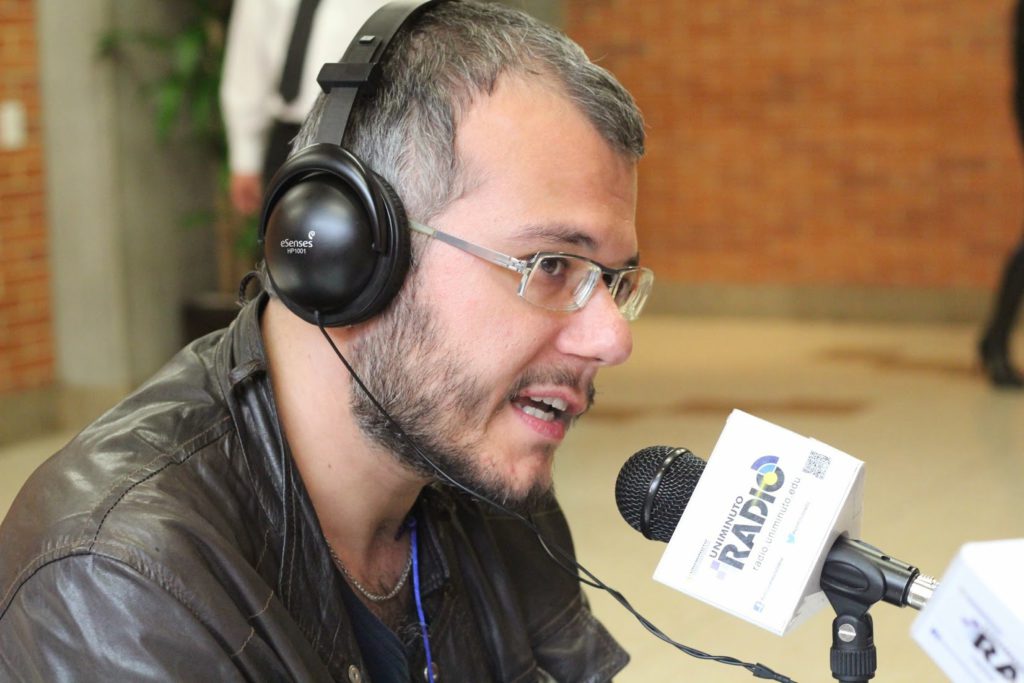
Moreover, she was an expert guest at the student radio channel Radio Swammerdam. Hosted from within the Amsterdam public library, she discusses data activism and surveillance issues in very practical terms. Listen to a part of the interview below (in Dutch), kindly made available by Radio Swammerdam.


By: Radio Swammerdam from the
“Revolutie I: Data activisme en de (r)evolutie van de kraker”
Licensed under: https://creativecommons.org/licenses/by-nc-sa/3.0/
The full episode is available at https://soundcloud.com/swammerdam


DATACTIVE at AOIR in Berlin

The DATACTIVE team will host a session at AIOR2016 Big Data Meet Grassroots Activism, Berlin, 5-8 October, 2016

Stefania Milan, Lonneke van der Velden, Jonathan Gray, Becky Kazansky, Frederike Kaltheuner

How are data and information changing contemporary activism? How do individuals and collectives resist massive data collection? How do they take advantage of the increasing availability of data for advocacy and social change?

Citizens are increasingly aware of the critical role of information as the new fabric of social life. This awareness translates into new forms of civic engagement and sociotechnical practices that creatively combine complex information, software and platforms, and political activism. However, to date little has been said about the relation between the organized civil society, activism, and big data broadly defined. In particular, the dimension of collective action, the shaping role of technology and software environments, and the impact of big data on the civil society’s ecosystem remain largely unexplored.

This fishbowl session aims at stimulating an interdisciplinary debate on the interplay between big data broadly defined and grassroots activism. It intends to involve scholars of internet studies, science and technology studies, platform and software studies, as well as political sociology and activism. It evokes internet culture and practices, collective identities and organizational forms, activism and social justice, looking for their entanglement with software and code, platforms, and sociotechnical interfaces that facilitate grassroots’ engagement with data and information.

The five initial participants will contribute to set the agenda of the debate, by offering 5-minute presentations on the different aspects of the suggested theme, namely: data activism, open source intelligence and the use of devices to ‘watch the watchers’, open data for social change, activism and predictive analytics, anti-surveillance and privacy activism.

Expected outcomes include a) an interdisciplinary debate on the intersection of big data and grassroots activism structured around the fish’s ice-breaker presentations, and b) the creation of a network of interested individuals working on the interplay between big data and the civil society broadly defined.

Lonneke van der Velden and Stefania Milan present at 4S/EASTT

Stefania Milan, Annalisa Pelizza (University of Twente) and Francesca Musiani (CNRS) organised a track at 4S/EASTT (european association for the study of science and technology) on “Materialising Governance by Information Infrastructure” and gave a joint presentation “Embedding rules and values in information technology infrastructure: A reflection”. Lonneke van der Velden presented at 4S/EASTT on Open Source Intelligence as a form of data activism.

New logo – new design!

final_colour-2realJust in time for the Contentious Data kick-off workshop on September 15, we are happy to announce that DATACTIVE has a new logo! The design is by Federica Bardelli and Carlo De Gaetano, who explain the concept as follows:

“A word (DATACTIVE) is a data point that can be encrypted, hidden and disguised – both in its shape and meaning. It is also and action of communication, a statement of resistance and awareness.

In reference to the lo-fi printing/photocopy techniques of the 70’s punk fanzines and to the recent rediscovery of that visual language by the new wave of experimental design clusters (see: Metahaven) we scanned the word DATACTIVE as an action of re-appropriation of meaningful data. Moving the printed word on the scanner multiple times generates new shapes, new distortions, meaning the active and evolving nature of both DATACTIVE objects of study and therefore of DATACTIVE itself.”

If you like the design by Federica Bardelli and Carlo De Gaetano, please check out their portfolios here and here.

final_square_colour-2real

final_square_bw-2


Contentious Data: A One-day event on the Politics of Big Data for Activism

Coming up on September 15, 2016!

CScreen Shot 2016-08-04 at 19.02.46ontentious Data is the kick-off  event of the DATACTIVE project.

How do people resist corporate privacy intrusion and government surveillance by means of technical fixes? How does civil society take advantage of the possibilities for civic engagement, advocacy, and campaigning provided by the availability of the so-called ‘big data’?

We are an interdisciplinary research project hosted at  the Department of Media Studies at the University of Amsterdam. DATACTIVE  investigates citizens’ engagement with massive data collection. It originates  from the observation that, with the diffusion of big data, citizens become increasingly aware of the critical role of information in modern societies. This awareness nurtures new social practices rooted on data and technology, which we term ‘data activism’. By increasingly involving ordinary users, data activism is a signal of a change in perspective and attitude towards massive data collection emerging within the civil society realm.

Contentious Data will bring together scholars and practitioners to explore the politics of big data from the perspective of activism and civil society.

Speakers include Sandra Braman (Texas A&M University), Alison Powell (London School of Economics), Hisham al-Miraat (Digital Rights Morocco), Linnet Taylor (Tilburg Institute for Law, Technology and Society), Dorien Zandbergen (University of Amsterdam), Jaromil/Denis Rojo (dyne.org), Geert Lovink (Institute for Network Cultures), and Stefania Milan (DATACTIVE Principle Investigator).

Contentious Data is sponsored by the European Research Council (ERC), the Amsterdam Centre for Globalisation Studies (ACGS), the Amsterdam School of Cultural Analysis (ASCA), and the Amsterdam Institute for Social Science Research (AISSR).

ERCacgs-logo Drukwerk     asca-logo-hippo-m


Learn more about our speakers and the final programme here:

Brochure-DATACTIVE-EVENT-for-speakers-final

Registration

The workshop is public and free of charge, but seating is limited so please register in advance by filling this form:

[rsvp]