Author: Jeroen

Stefania Milan gives workshop at Hirikilabs in San Sebastian

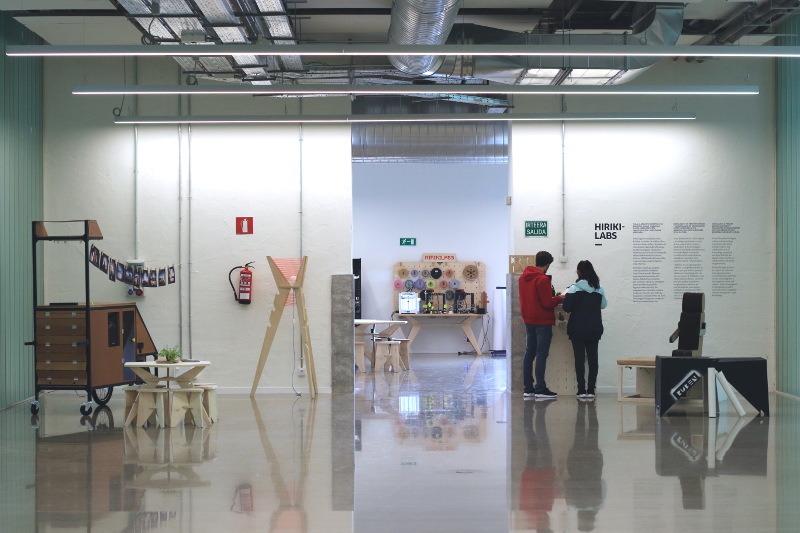
Stefania Milan and Miren Gutierrez gave a workshop at Hirikilabs, 16 July, San Sebastian: “Big data, citizens and data activism”.

Hirikilabs is a laboratory for digital culture and technology working on the social, critical, creative and collaborative use of technology. As a space for experimentation and prototyping it proposes activities related to the digital world, collaborative creation and citizen initiative and does so in the context of an international production centre for contemporary culture such as Tabakalera.


DATACTIVE at the Digital Methods Summer School

The DATACTIVE team will organise the second week of annual Digital Methods Summer School at the University of Amsterdam from July 4 – 8, 2016. We will lead three projects on digital methods for mailing lists, mapping the civil tech landscape and the evolution of digital security tools. The results of our work will be shared on this blog in the following week.

Data Activism

The theme of this year’s Digital Methods Summer School is “Only Connect? A Critical Appraisal of Connecting Practices in the Age of Social Media”. The second week will be entirely dedicated to data activism.

With the diffusion of big data, citizens become increasingly aware of the critical role of information in modern societies. Today’s world is awash with data. Never before have we created such a quantity of data by and about people, things, and their interactions. While this data has captured the imagination of governments and corporations alike, people are also increasingly responding to this new technological landscape.

From open data initiatives to privacy enhancing technologies, a growing number of people are developing new tools and practices in response to massive data collection and availability. People take advantage of the possibilities of data for civic engagement, advocacy, and campaigning (pro-active data activism). At the same time, people resist its harms through the development and use of encryption and free and open source alternatives to centralised software and online services (re-active data activism). Data activism is a signal of a more general change in perspectives and attitudes towards massive data collection. For more see data-activism.net.

Experiments with methods

Data activism emerges at the intersection of the social and technological dimensions of human action. This raises the question: how are we to understand and study this phenomenon? We think that it is important to experiment with methods. We want to investigate how people make use of data and interact with the socio-technical infrastructures that enable their circulation. This is especially relevant, since these are often complex, proprietary and opaque. For this purpose, we want to test and refine research approaches that enable the study of technological practices and infrastructures. This can involve configurations of digital methods and ethnographically informed traditions bridging media studies, science and technology studies (STS), informatics, and anthropology.

  • Can we develop an approach to ‘software ethnography’, which traces and explores assemblages of data, infrastructures, technology designers and technology users?
  • How can we learn how (big) data infrastructures actually function and are used in practice?
  • Technology is always changing. How can we trace changes to the socio-technical infrastructures of tools over time?
  • How can new software tools help us understand the workings of different kinds of data infrastructures? Can we develop tools to reverse-engineer algorithms, analytic techniques, or surveillance infrastructures?

Our projects

Mapping the Civic Tech landscape using digital methods

Civic Technology has become a popular term over the past years. Whilst there is no clear definition of the term, the wider civic tech scene spans from business-oriented tech start-ups towards (digital) social and political activist groups. However, attention is often disproportionately directed towards creation of tools and technologies at the expense of the development of other capacities needed to pull them to work in the service of social and democratic goals.

In this project we will apply various digital methods in order to explore the fabrics of civic tech in the digital.

Evolution of digital security tools – sociotechnical infrastructures of security tools

For this project we will trace changes in the chat application ecosystem try to understand the evolution of their design. Encrypted chat applications such as whatsapp, signal, telegram, and others have garnered a lot of attention in the last couple of years, with increasing public awareness and confusion over their relative merits.

Signal, a tool developed within the free libre open source software community, has recently begun contributing to the infrastructure of closed, commercial tools such as whatsapp and now Google Ello, leading to pushback in the community. As Signal has become a product, its lead developer has written that he sees less importance in federating its infrastructure with other free and libre open source tools, breaking both a formal and informal code among free libre open source developers. As researchers interested in tracing the evolution of sociotechnical infrastructures,  we argue that the evolving ecosystem of chat tools offers a great opportunity to develop DATACTIVE’s ‘infrastructure ethnography’ both in method and object of study. 
Discussions about encrypted chat apps generally focus on issues of usability and design. Instead, the extent to which encrypted chat apps are sustainable is just as, and maybe even more, important. This research project focuses on how infrastuctures are shared and maintained and thereby aims to trigger discussion about the sustainability of applications for encryption.

Digital methods for mailing lists

The Big Bang tool can be used to study collaborations in mailing lists and on github. We want to use this tool to study the composition and development of the ICANN community. Are there different socio-technical imaginaries, across different ‘generations’ of users? Which words or phrases are used at what time? To what extent have conversations about rights spread from civil society discourse to the more general ICANN (industry-related) discourse?
DATACTIVE team presented three projects at Digital Methods Summer School

The DATACTIVE team hosted the second week of the Digital Methods Summer School at the University of Amsterdam, 27 June – 8 July 2016.

Individual team members initiated three projects:

Evolution and sustainability of digital security tools

Exploring the fabrics of civic tech on digital media

Digital methods for mailing lists analysis: Exploring the ICANN community

Stefania Milan at the 66th Annual ICA Conference in Japan

Stefania Milan presented at the annual conference of the international communication association Communication through Power, Fukuoka, Japan – 9-13 June 2016.

Big Data & Activism: A (Grassroots) Research Agenda for Big Data

Organizers: Stefania Milan (U of Amsterdam), S.Milan@uva.nl

Date: Friday, June 10; 9:30 – 10:45

Location: Akane, Fukuoka Hilton

Description: Citizens are increasingly aware of the critical role of informationas the new fabric of social life. This awareness translates into new forms of civic engagement andpolitical action that go under the rubric of ‘data activism’. Data activism embraces a variety of sociotechnical practices that in different forms, from the local to the transnational level, and from different points of departure take a critical perspective towards massive data collection.Data activismtakes big data both as a challenge to civil rights, and a novel set of opportunities for social change; itleverages technological innovation, and software in particular, for political or social change purposes.Activiststakeinformation as a constitutive force in society capable to shape social reality (Braman, Change of State, 2009).

Up to now, little has been said about the relation between the organized civil society and big data. Scholars have focused their attention on individual forms of resistance to computer–enabled data collection, or on the role of business actors in enabling massive data collection. However, the dimension of collective action, the shaping role oftechnology and software environments, and the impact of big dataon the civil society’s ecosystem andthe related action repertoires, among others,remainlargely unexplored.

The goal of this blue sky workshop is to brainstorm an interdisciplinary, multi-method research agenda for big data from the perspective of the (organized) civil society, around and beyond the notion of data activism. Expected outcomes include structured notes for a research agenda touching also upon epistemological, methodological, and ethical concernsof studying big data and massive data collection from a grassroots perspective, as well as the creation of a network of interested individuals working on the interplay between big data and the civil society broadly defined. The workshopbuilds on the experience of the DATACTIVE research project and collective based at the Department of Media Studies of the University of Amsterdam, the Netherlands (https://data-activism.net).

Stefania Milan was invited to ZeMKI in Bremen

Stefania Milan was invited to give a talk at the Zentrum für Medien-, Kommunikations- und Informationsforschung (ZeMKI) of the University of Bremen, as part of the research seminar series ‘Digital Traces’, investigating media change and its relation to datafication. She spoke about ‘Datafication and Civic Participation: The Emerging Epistemic Culture of Data Activism’, June 2, 2016.

Stefania Milan and Becky Kazansky at the 7th biennial Surveillance & Society

Stefania Milan and Becky Kazansky presented at the 7th biennial Surveillance & Society conference in Barcelona, April 21-23, 2016. Stefania talked about “Data activism as an emerging epistemic culture within civil society”, Becky about “Instrumentalising Risk to Conduct Surveillance and Defend Against it: the Risk Calculation Practices of Cybersecurity Actors and Human Rights Defenders”.

Introducing the DATACTIVE Ethics Board

We are very happy to announce the DATACTIVE Ethics Board.

As a collective we take the ethics of research very seriously. That is why we have selected board members whose work and ethical commitments we admire and respect. We expect to consult the EAP every six months, or frequently if necessary, as we dive into the empirical work and take decisions concerning data collection, data management and engagement with activists on the ground. Our board is composed of academics, as well as community members.

We are thrilled to be able to count on each of them for help, inspiration and oversight throughout the next years!

Below you find the list of your fellow Ethics Board members, in alphabetical order.

Ethics Board

Julia Hoffmann (Hivos, the Netherlands)

Jaromil, aka Denis Rojo (Dyne.org, the Netherlands)

Masashi Nishihata (Citizen Lab, Canada)

Annalisa Pelizza (University of Twente, the Netherlands)

Melanie Rieback (Radically Open Security, the Netherlands)

Charlotte Ryan (University of Massachusetts Lowell, and Media/Movement Research Action Project, USA)

Tatiana Tropina (Max Planck Institute for Foreign and International Criminal Law, Germany)

Introducing the DATACTIVE Advisory Board

We are proud to announce the stellar Advisory Board of the DATACTIVE project.

Our board members have been selected because their work and expertise has been and keeps being of great inspiration to our work. We went for a healthy mix of gender and themes, as well as career stage, and were looking for people that are in line with the interdisciplinary work as well as ethical commitments of our project. We are thrilled to be able to count on each of them throughout the next years.

The project can count also on an Ethics Advisory Board. Additional information will be posted on our website soon.

Below you find the list of your fellow Advisory Board members, in alphabetical order.

Advisory Board

Sandra Braman (Texas A&M University)

Sasha Constanza-Chock (MIT)

Chris Csikszentmihályi (Madeira Interactive Technologies Institute)

Ronald Deibert (University of Toronto)

Donatella della Porta (Scuola Normale Superiore, Italy)

Laura deNardis (American University, Washington)

Paul Dourish (University of California, Irvine)

Seda Gürses (Princeton University)

Mark Graham (Oxford Internet Institute)

Arne Hintz (Cardiff University)

Noortje Marres (Warwick University)

Francesca Musiani (CNRS, France)

Evelyn Ruppert (Goldsmiths, University of London)

Remedios Zafra (Universidad de Sevilla)     


The Board is also comprised of community representatives:

Hisham al-Miraat (cyberactivist, Morocco)

Renata Avila (World Wide Web Foundation)

Jordi Blanchar (Propagate Collective, UK)

Nighat Dad (Digital Rights Foundation, Pakistan)

Gus Husein (Privacy International)

Nishant Shah (Leuphana University)