Category: show in team updates

New logo – new design!

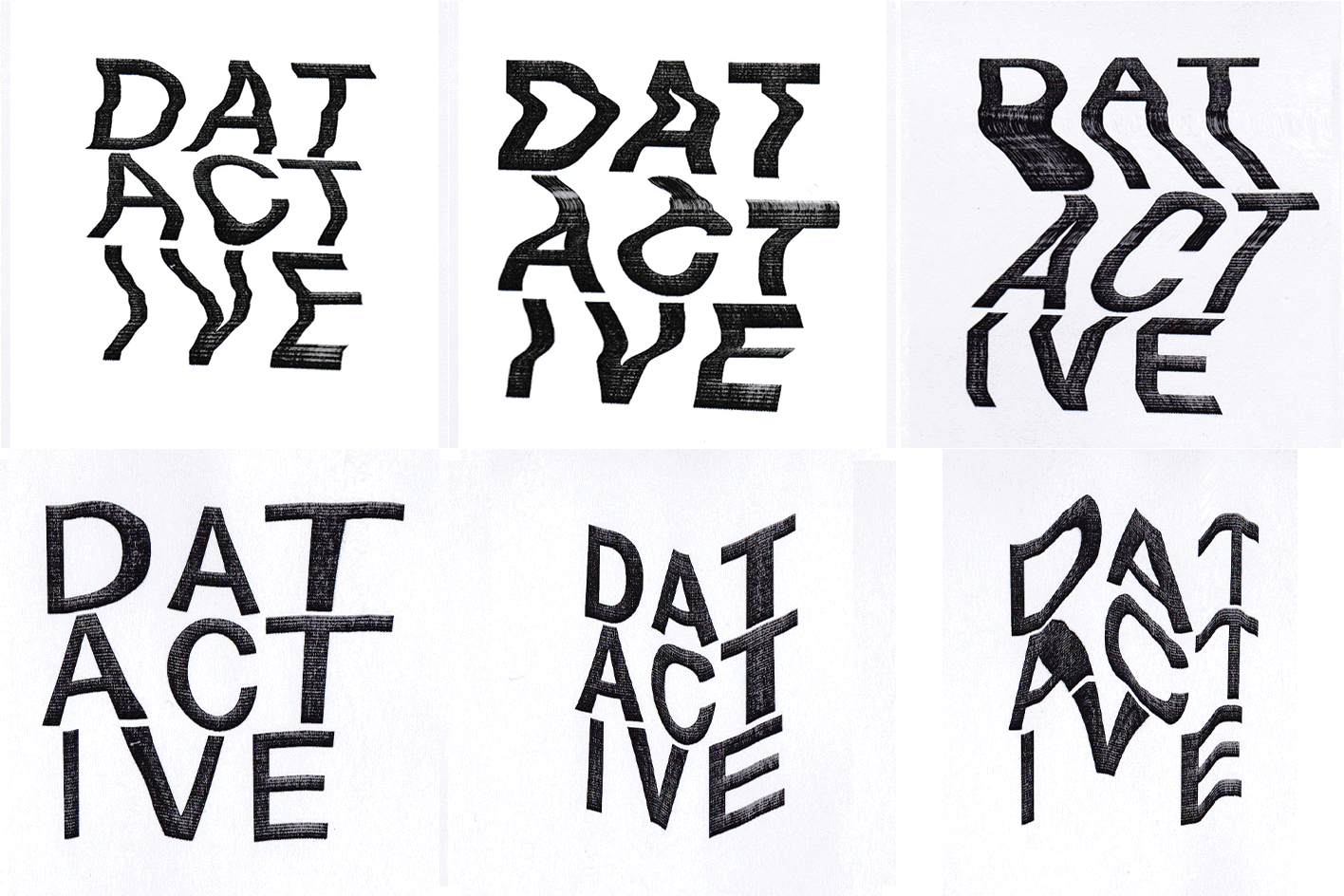
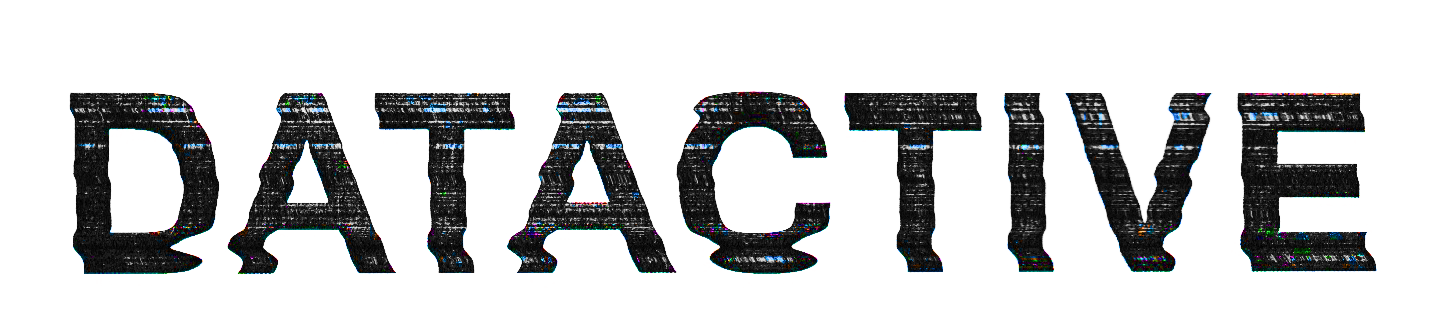
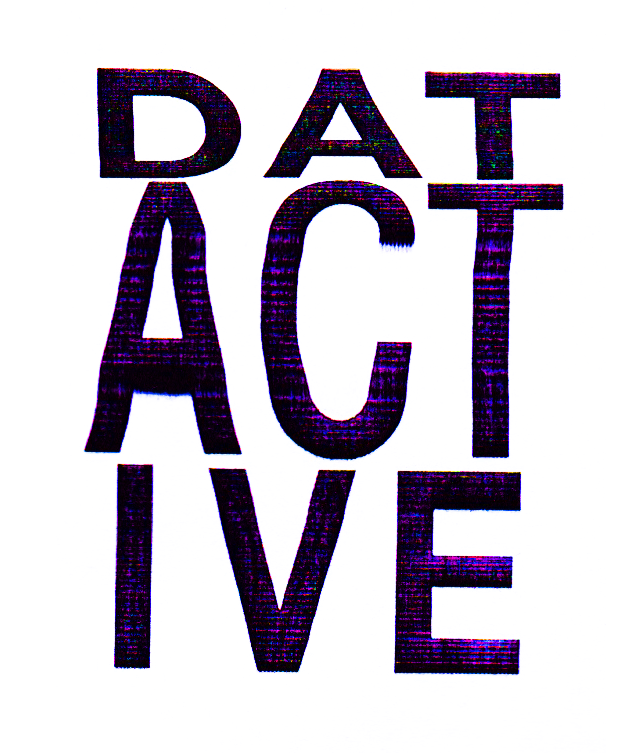
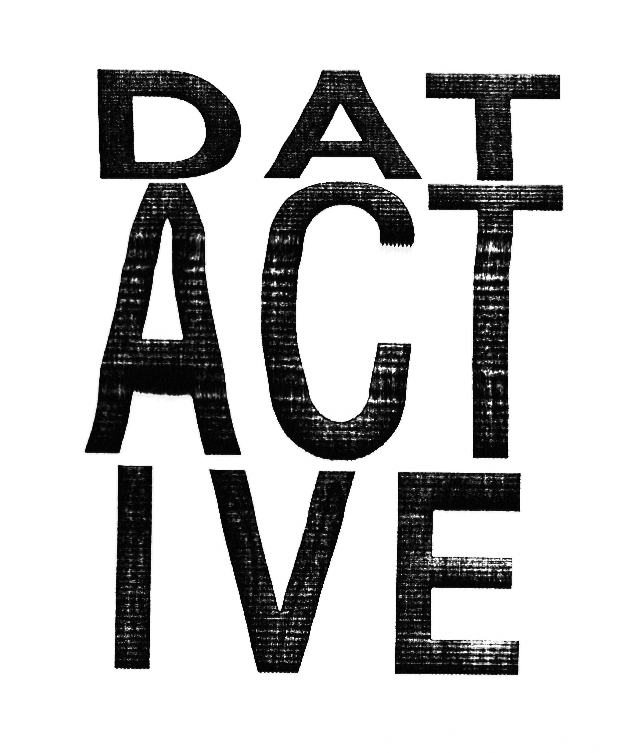
final_colour-2realJust in time for the Contentious Data kick-off workshop on September 15, we are happy to announce that DATACTIVE has a new logo! The design is by Federica Bardelli and Carlo De Gaetano, who explain the concept as follows:

“A word (DATACTIVE) is a data point that can be encrypted, hidden and disguised – both in its shape and meaning. It is also and action of communication, a statement of resistance and awareness.

In reference to the lo-fi printing/photocopy techniques of the 70’s punk fanzines and to the recent rediscovery of that visual language by the new wave of experimental design clusters (see: Metahaven) we scanned the word DATACTIVE as an action of re-appropriation of meaningful data. Moving the printed word on the scanner multiple times generates new shapes, new distortions, meaning the active and evolving nature of both DATACTIVE objects of study and therefore of DATACTIVE itself.”

If you like the design by Federica Bardelli and Carlo De Gaetano, please check out their portfolios here and here.

final_square_colour-2real

final_square_bw-2


Stefania Milan gives workshop at Hirikilabs in San Sebastian

Stefania Milan and Miren Gutierrez gave a workshop at Hirikilabs, 16 July, San Sebastian: “Big data, citizens and data activism”.

Hirikilabs is a laboratory for digital culture and technology working on the social, critical, creative and collaborative use of technology. As a space for experimentation and prototyping it proposes activities related to the digital world, collaborative creation and citizen initiative and does so in the context of an international production centre for contemporary culture such as Tabakalera.


DATACTIVE team presented three projects at Digital Methods Summer School

The DATACTIVE team hosted the second week of the Digital Methods Summer School at the University of Amsterdam, 27 June – 8 July 2016.

Individual team members initiated three projects:

Evolution and sustainability of digital security tools

Exploring the fabrics of civic tech on digital media

Digital methods for mailing lists analysis: Exploring the ICANN community

Stefania Milan at the 66th Annual ICA Conference in Japan

Stefania Milan presented at the annual conference of the international communication association Communication through Power, Fukuoka, Japan – 9-13 June 2016.

Big Data & Activism: A (Grassroots) Research Agenda for Big Data

Organizers: Stefania Milan (U of Amsterdam), S.Milan@uva.nl

Date: Friday, June 10; 9:30 – 10:45

Location: Akane, Fukuoka Hilton

Description: Citizens are increasingly aware of the critical role of informationas the new fabric of social life. This awareness translates into new forms of civic engagement andpolitical action that go under the rubric of ‘data activism’. Data activism embraces a variety of sociotechnical practices that in different forms, from the local to the transnational level, and from different points of departure take a critical perspective towards massive data collection.Data activismtakes big data both as a challenge to civil rights, and a novel set of opportunities for social change; itleverages technological innovation, and software in particular, for political or social change purposes.Activiststakeinformation as a constitutive force in society capable to shape social reality (Braman, Change of State, 2009).

Up to now, little has been said about the relation between the organized civil society and big data. Scholars have focused their attention on individual forms of resistance to computer–enabled data collection, or on the role of business actors in enabling massive data collection. However, the dimension of collective action, the shaping role oftechnology and software environments, and the impact of big dataon the civil society’s ecosystem andthe related action repertoires, among others,remainlargely unexplored.

The goal of this blue sky workshop is to brainstorm an interdisciplinary, multi-method research agenda for big data from the perspective of the (organized) civil society, around and beyond the notion of data activism. Expected outcomes include structured notes for a research agenda touching also upon epistemological, methodological, and ethical concernsof studying big data and massive data collection from a grassroots perspective, as well as the creation of a network of interested individuals working on the interplay between big data and the civil society broadly defined. The workshopbuilds on the experience of the DATACTIVE research project and collective based at the Department of Media Studies of the University of Amsterdam, the Netherlands (https://data-activism.net).
Stefania Milan was invited to ZeMKI in Bremen

Stefania Milan was invited to give a talk at the Zentrum für Medien-, Kommunikations- und Informationsforschung (ZeMKI) of the University of Bremen, as part of the research seminar series ‘Digital Traces’, investigating media change and its relation to datafication. She spoke about ‘Datafication and Civic Participation: The Emerging Epistemic Culture of Data Activism’, June 2, 2016.

Stefania Milan and Becky Kazansky at the 7th biennial Surveillance & Society

Stefania Milan and Becky Kazansky presented at the 7th biennial Surveillance & Society conference in Barcelona, April 21-23, 2016. Stefania talked about “Data activism as an emerging epistemic culture within civil society”, Becky about “Instrumentalising Risk to Conduct Surveillance and Defend Against it: the Risk Calculation Practices of Cybersecurity Actors and Human Rights Defenders”.

Introducing the DATACTIVE Ethics Board

We are very happy to announce the DATACTIVE Ethics Board.

As a collective we take the ethics of research very seriously. That is why we have selected board members whose work and ethical commitments we admire and respect. We expect to consult the EAP every six months, or frequently if necessary, as we dive into the empirical work and take decisions concerning data collection, data management and engagement with activists on the ground. Our board is composed of academics, as well as community members.

We are thrilled to be able to count on each of them for help, inspiration and oversight throughout the next years!

Below you find the list of your fellow Ethics Board members, in alphabetical order.

Ethics Board

Julia Hoffmann (Hivos, the Netherlands)

Jaromil, aka Denis Rojo (Dyne.org, the Netherlands)

Masashi Nishihata (Citizen Lab, Canada)

Annalisa Pelizza (University of Twente, the Netherlands)

Melanie Rieback (Radically Open Security, the Netherlands)

Charlotte Ryan (University of Massachusetts Lowell, and Media/Movement Research Action Project, USA)

Tatiana Tropina (Max Planck Institute for Foreign and International Criminal Law, Germany)

Introducing the DATACTIVE Advisory Board

We are proud to announce the stellar Advisory Board of the DATACTIVE project.

Our board members have been selected because their work and expertise has been and keeps being of great inspiration to our work. We went for a healthy mix of gender and themes, as well as career stage, and were looking for people that are in line with the interdisciplinary work as well as ethical commitments of our project. We are thrilled to be able to count on each of them throughout the next years.

The project can count also on an Ethics Advisory Board. Additional information will be posted on our website soon.

Below you find the list of your fellow Advisory Board members, in alphabetical order.

Advisory Board

Sandra Braman (Texas A&M University)

Sasha Constanza-Chock (MIT)

Chris Csikszentmihályi (Madeira Interactive Technologies Institute)

Ronald Deibert (University of Toronto)

Donatella della Porta (Scuola Normale Superiore, Italy)

Laura deNardis (American University, Washington)

Paul Dourish (University of California, Irvine)

Seda Gürses (Princeton University)

Mark Graham (Oxford Internet Institute)

Arne Hintz (Cardiff University)

Noortje Marres (Warwick University)

Francesca Musiani (CNRS, France)

Evelyn Ruppert (Goldsmiths, University of London)

Remedios Zafra (Universidad de Sevilla)     


The Board is also comprised of community representatives:

Hisham al-Miraat (cyberactivist, Morocco)

Renata Avila (World Wide Web Foundation)

Jordi Blanchar (Propagate Collective, UK)

Nighat Dad (Digital Rights Foundation, Pakistan)

Gus Husein (Privacy International)

Nishant Shah (Leuphana University)