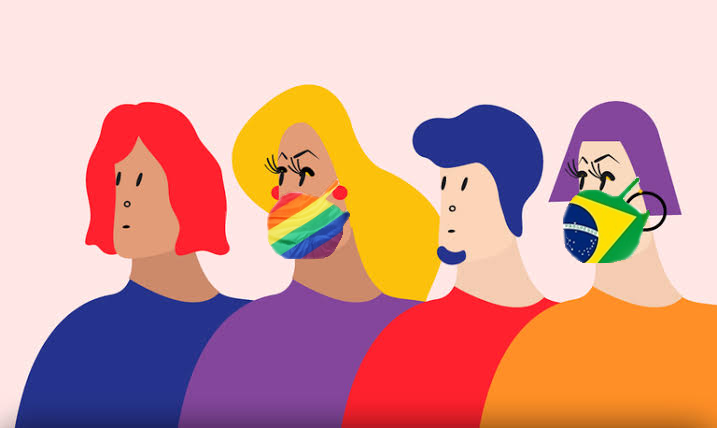
Antes del Covid-19, México ya sufría otra epidemia que durante el 2019 reclamó miles de vidas: los feminicidios. ¿Qué están haciendo las mujeres mexicanas para visibilizar la violencia de género en tiempos de cuarentena?
English abstract. As the COVID-19 virus spreads across Central America, another pandemic remains under the radar: domestic violence, which worsens as a consequence of the lockdown induced by the pandemic. This blog post explores the efforts of Mexican women to raise awareness of gender violence, reflecting on how data activism is helping to make this happen.
Mientras la pandemia provocada por el Covid-19 avanza en Latinoamérica, existe otra pandemia que sigue invisible: la creciente cantidad de casos de violencia de género que arrasa en México. Los números siguen aumentando, como la consecuencia no deseada de la cuarentena impuesta por el gobierno para combatir el contagio del virus. Esta violencia de género es la otra epidemia que lleva años cobrando vidas en México. ¿Qué están haciendo las mujeres mexicanas para visibilizar la violencia de género en tiempos de cuarentena?
Violencia de género en México y la movilización feminista
La violencia de género ya era una epidemia en México cuando se dieron los primeros casos positivos de Covid-19 en el país. Durante el 2019 asesinaron a 3,825 mujeres, cifra que la geofísica María Salguero ha rastreado a través de su mapa de feminicidios, el cual se nutre de los asesinatos a mujeres reportados en la prensa, proyecto que lleva desde 2016. Es decir, en México se asesinaba por lo menos a diez mujeres al día. Cabe notar que estas no son cifras oficiales gubernamentales, las cuales difieren mucho de las de este proyecto generado por la ciudadanía.
En febrero de este año las redes sociales se llenaron de los hashtags #JusticiaParaTodas y #CosasQuePasanPorSerMujer. La sociedad mexicana se había enfurecido por los asesinatos de la pequeña Fátima e Ingrid Escamilla. El caso de Fátima se trató de una niña de 7 años secuestrada, asesinada y mutilada por sus vecinos. Ingrid Escamilla fue una mujer asesinada y mutilada, cuyas imágenes del cuerpo sin vida fueron publicadas en varios medios de comunicación. Como resultado, las fotografías fueron compartidas en las redes sociales. Esto causó que muchos usuarios etiquetaran fotografías hermosas con el nombre de Ingrid Escamilla, para “limpiar” su nombre y hacer que se perdieran las imágenes publicadas por los medios de comunicación amarillistas.
Este año, el 8 de marzo, Día Internacional de la Mujer, fue muy especial para las mexicanas. Ese día salieron a la calle cientos de mujeres para protestar contra la violencia de género, un problema que lleva años en la sociedad latinoamericana y que cada vez parece empeorar. Las manifestantes demandaron un cambio en la estructura social para que ya no se permita la violencia sexual, exigieron igualdad de género en las políticas públicas y la no impunidad a los agresores, y la transparencia en los datos sobre violencia de género.
Hasta ese momento, todo el cambio que se había logrado venía desde las mismas sociedades, de las mujeres reunidas bajo un objetivo y sin el apoyo del gobierno mexicano.
Cuatro días después, el 12 de marzo, se declaró la pandemia mundial, y en México el 20 de marzo el gobierno federal declaró la cuarentena. Pero esto no fue lo peor para las mujeres mexicanas. La mayoría de los casos de violencia de género se dan en los hogares, y ahora muchas mujeres se vieron obligadas a estar encerradas junto con sus agresores.
Sin mecanismos para frenar la violencia de género durante la pandemia
En México se están haciendo esfuerzos para frenar el contagio de Covid-19, pero no existen mecanismos para frenar la violencia doméstica de género. Esto hace que las mujeres mexicanas no sólo tengan miedo de un contagio, sino que también aumenta el miedo a sufrir violencia en sus casas, sin contar el número de mujeres que viven en condición de pobreza.
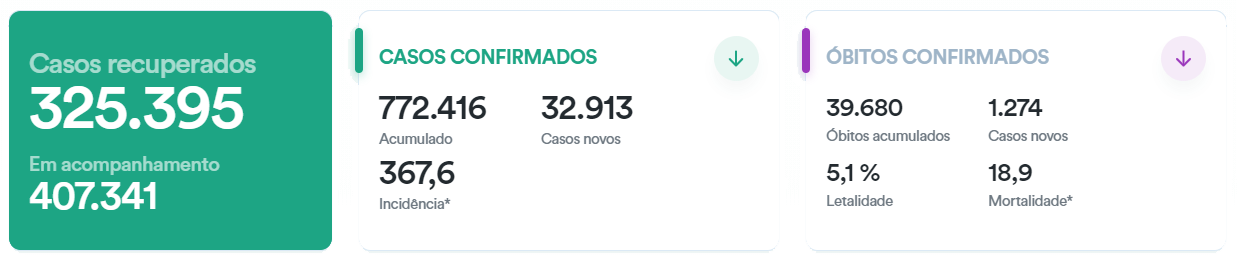
En el Banco Nacional de Datos e Información sobre Casos de Violencia contra las Mujeres (BANAVIM), se declaró que del 20 de marzo al 2 de mayo se registraron 19,602 agresiones contra la mujer, y el 90% de estas agresiones fueron cometidas por personas que viven bajo el mismo techo. El Secretariado Ejecutivo del Sistema Nacional de Seguridad Pública (SESNSP) mencionó que durante el mes de marzo se recibieron 64,858 llamadas al 911 debido a violencias contra la mujer, con un aumento del 23% en comparación con el mes anterior.
Esto indica que cada día de cuarentena se denuncian de manera formal 490 casos de violencia, uno cada tres minutos. Este cálculo no cuenta el número de casos que se dan en casa y no son denunciados a las autoridades. Hasta el mes de abril se declararon al menos 210 feminicidios en el país.
Todos los esfuerzos que se han hecho para medir el índice de contagios de Covid-19 han desviado la mirada al problema que afectaba a las mujeres desde hace años. La crisis provocada por la pandemia Covid-19 es más visible porque ocurre a nivel mundial y se compara a México con otros países. De esta manera, los recursos gubernamentales han sido recortados de los programas de violencia de género para darlos a la infraestructura en el sector salud, a pesar de que la violencia contra las mujeres sigue creciendo.
Las respuestas desde abajo
Como ahora están prohibidos los eventos masivos, las marchas y las protestas como las ocurridas el ocho de marzo, la mejor opción para las mujeres mexicanas es recurrir al activismo digital, como se vio en los casos de Fátima e Ingrid Escamilla. El 6 de mayo, el presidente de México, Andrés Manuel López Obrador, fue cuestionado sobre las políticas contra la violencia doméstica durante la cuarentena. López Obrador negó que los índices hubieran aumentado. Los días posteriores, diversas organizaciones feministas como Brujas del Mar y Luchadoras alzaron la voz, y junto con otras asociaciones de derechos humanos hicieron declaratorias públicas en sus redes sociales.
Desde el lunes once de mayo, muchísimas mujeres se unieron a exigir que se visibilice la violencia de género doméstica bajo el hashtag #NosotrasTenemosOtrosDatos, para pedir transparencia en la identificación y publicación de casos de violencia doméstica en todo el país.
Debido a la pandemia, el activismo de datos -es decir el uso estratégico de información para generar un cambio social- es cada vez más relevante y necesario para visualizar todos los problemas que enferman a la sociedad, no sólo las infecciones de Covid-19 sino también las otras epidemias como la violencia de género.
Teresa Villaseñor es feminista, bibliotecóloga y actualmente es estudiante de la maestría en Desarrollo Económico y Cooperación Internacional en la Benemérita Universidad Autónoma de Puebla.
What does the Covid-19 crisis say about the Russian state’s digital power, and the challenges it poses to public freedoms?
By Olga Bronnikova, Françoise Daucé, Ksenia Ermoshina, Francesca Musiani, Bella Ostromooukhova, Anna Zaytseva
Originally published in French on The Conversation France on April 29, 2020, under a Creative Commons BY-NC license. Translated by Francesca Musiani.
Despite the evolution of the Covid-19 pandemic in Russia, a state of emergency has not been declared in the country: only a state of “high alert” has entered into force in Moscow and in specific regions since early April. “Compulsory holidays” are only partially respected by a population plunged into a growing vagueness that is health-related, legal and economic at once. In this context, Russia is deploying and updating its digital strategy and infrastructure, which have been carefully scrutinized in recent years because of their (increasingly) strong centralizing and authoritarian dimensions. What does the Covid-19 crisis say about the Russian state’s digital power, and the challenges it poses to public freedoms?
The Russian state facing Covid-19: Digital ambitions put to the test
The Russian authorities very early advocated the massive use of digital tools to control the movements of citizens and limit the circulation of the virus. These uses aimed at “securitization” are inspired by foreign examples (China, Korea, Singapore), but they are also part of the “sovereignty” logic of the Russian Internet (Runet), already engaged before the start of the epidemic, and they are consolidating surveillance systems whose existence dates back several years (e.g. video surveillance cameras, aggregation of geolocation data supplied to the authorities by mobile operators).
As of February, Sergei Sobyanin, the mayor of Moscow, proposes the use of facial recognition to monitor people returning from abroad, using the surveillance cameras of the “Safe City” program, in force since 2018. Between February and March, 200 people who broke their quarantine were thus identified, including a man who took out his trash. But as a study by IT and SORM (a blog on Telegram devoted to Runet surveillance and regulation issues, with more than 73,000 subscribers) shows, this device is a catalyst for inequality: these surveillance cameras are mainly installed in the modest districts of Moscow because those who decide their location, who themselves reside in the upscale districts, do not wish their activities to be monitored.
On March 20, 2020, faced with an increase in contaminations, Prime Minister Mikhail Mishustin recommends monitoring citizens who are or have been in contact with infected people, by collecting geolocation data from operators, and transmitting them to local administrations. A patient monitoring application, “Social monitoring”, is made available on April 1 on GooglePlay. It quickly becomes controversial, as its surveillance goes far beyond the movement of patients and offers little protection of personal data; the application is finally withdrawn.
However, digital tracking of citizens has not been abandoned. Since April 13, all trips within Moscow that involve public transportation are carried out, under penalty of fines, with a digital pass, to be generated on an official website. In response to criticism of the “Social Monitoring” application, the Moscow municipality declares that with this new device, personal data will be stored on Russian territory (in accordance with the 2014 law, targeting in particular “giant” United States-based platforms such as Google) and will be deleted when the “high alert” state will be over. The same system works in Tatarstan and the Primorye region; QR-Code passes are also available and recommended but not mandatory in Nizhny-Novgorod, while other Russian regions resort to lighter measures.
Resistance and mobilisations of the free Internet
The use of digital data to strengthen surveillance of the population while coping with the disease is causing concern for defenders of online freedoms. Technologists, engineers and developers discuss government projects and conduct independent investigations to uncover security vulnerabilities, technical issues and other controversial aspects of the technologies deployed by the Russian state.
Several associations and independent media alert Internet users to the growing attacks on the protection of personal data and the development of online surveillance. The NGO Roskomsvoboda published, on March 27, a vademecum on digital rights in a pandemic period, stressing that the use of personal data, especially biometric data, legally requires the consent of individuals. But “the use of facial recognition is in a gray area,” argues lawyer Sarkis Darbinyan. The association is also launching, with other associations in the post-Soviet space, an inventory of restrictions on digital freedoms around the world, while the Agora association is opening a legal aid service linked to the pandemic. Its lawyers are also concerned about the use of facial recognition to enforce quarantine. Activists close to government-opposing personality Alexei Navalny (Society for the Protection of Internet) denounce, even more boldly, the establishment of a “digital gulag”, and call on citizens not to transmit their personal data to the applications that control movements and trace contacts.
At the same time, solidarity initiatives are developing on the Internet, aimed at supporting the poorest citizens and the caregivers. The Makers vs. Covid collective uses 3D printing techniques to provide doctors with the protective gear they need. An online hackathon, “Covidhack”, is developing a bot for Telegram that helps produce a citizen database allowing people with coronavirus to speak anonymously and map their symptoms and requests.
Internet infrastructures are also being weakened by the pandemic, due to the growth in traffic linked to the new digital habits of confinement. Russian networks are frequently down, but the on-site work of technicians and cable operators employed by the three thousand and more Internet service providers (ISPs) that manage these networks comes at the risk of legal threats. OrderKom, a consulting firm for ISPs, offers these workers legal support which includes the preparation of authorizations for movements due to on-site work, and legal defense in the event of a fine.
Faults and paradoxes of digital surveillance
Over the days and the weeks, gaps emerge between the authorities’ security ambitions and the realities of their implementation. Digital surveillance and health-related solutions are delegated to many public and private, federal and regional players, who often make contradictory decisions. The paradoxes and dysfunctions documented by online freedom activists show the limits of the announced “securitization” design. Perhaps the most obvious failure is that of digital passes in Moscow. The Nedoma.mos.ru site, developed to generate them, uses foreign hosting servers; the government was therefore accused of putting its own project of sovereign Runet in jeopardy.
Digital freedom activists, such as Mikhail Klimarev (Society for the Protection of the Internet), point to the ineffectiveness of technological solutions; Covid-19 strategies should focus on civic responsibility, while digital surveillance infantilizes citizens and is likely to be circumvented. This crisis highlights the lack of mutual trust between citizens and the state. Indeed, the information on the epidemic disseminated by the state is viewed with suspicion, oscillating between “they are hiding the true extent of the disaster to us” and “it is a plot to muzzle us even more”. If the authorities take the Covid-19 crisis as an opportunity to re-open their hunt for “fake news”, on their end, Youtubers and independent journalists denounce the incomplete or questionable information disseminated by representatives of power, and their behavior in public (such as that of Vladimir Putin’s spokesperson, who showed up at a press conference with a highly contested virus “blocker” badge). Sometimes, events are borderline ironic, such as the Ministry of Foreign Affairs’ opening of a thread of information for its nationals abroad on the Telegram application… officially banned in Russia.
Thus, part of civil society, without questioning the need for confinement, mobilizes against the threatening initiatives of the Russian Big Brother. It denounces the incompetence of the authorities to manage the implementation of technical devices as well as the institutional power’s violation of its own laws (like the provision on the storage of Russian data on Russian territory), as well as the non-protection of personal data, which exposes them to leaks in the databases black market.
While the wide and ambitious Russian Internet surveillance and sovereignty project is gaining strength during the coronavirus crisis, its implementation is uncertain and often contradictory. The pandemic demonstrates the limits of the Internet infrastructure centralization project, and the government ends up being obliged to relax specific regulatory measures, such as the Yarovaya law (which requires ISPs to keep the history and metadata of users for the purpose of legal interception and fight against terrorism). However, this apparent complexity is not necessarily synonymous with ineffectiveness. It is part of the flexible reconfigurations of digital constraints in Russia, adjusting as best it can to the recently rising challenges, and – legitimately so – raises the concerns of digital freedoms defenders.
About the authors. Olga Bronnikova, Associate Professor at Université Grenoble Alpes. Françoise Daucé, Professor at EHESS, Director of CERCEC. Ksenia Ermoshina, Assistant Research Professor at CNRS, Centre for Internet and Society. Francesca Musiani, Associate Research Professor at CNRS, Deputy Director, Centre for Internet and Society. Bella Ostromooukhova, Associate Professor at Sorbonne Université. Anna Zaytseva, Associate Professor at Université Toulouse 2 Jean Jaurès.
All authors are members of the ANR-funded ResisTIC research project. Thanks to Grégory Rayko for guiding the original article to publication.
¡Gracias por tu interés en colaborar en el blog COVID-19 from the margins! Aquí encontrarás información acerca de cómo preparar tu entrega.
Por favor, leela atentamente.
Qué publicamos
Invitamos a colaborar involucrando las diferentes formas de impacto del COVID-19 en el Sur y en los diferentes Sures, incluyendo las consecuencias en infraestructura y redistribución en relación con la sociedad estudiada (vigilancia, estadísticas, intentos de construcción de narraciones). En particular, buscamos publicar entradas de blog que exploren aquellas consecuencias y las maneras en las que las personas y las comunidades de los Sures responden a ellas.
¿Cuál es nuestra definición de Sur(es)? El Sur es una entidad amalgamada y plural, que si bien incluye una connotación geográfica (el “Sur Global”), va más allá de ella. Desde esta perspectiva, el Sur(es) es a place of (and a proxy for) alterity, resistance, subversion, and creativity (Milan and Treré 2019, p. 235).
Los autores de publicaciones aceptadas recibirán una retribución standard (€ 50). Las categorías son las siguientes: estudiantes, personas desempleadas o trabajadores precarios, en particular del llamado Sur Global. Los pedidos serán evaluados de manera individual.
Rogamos tener en cuenta que actualmente estamos recaudando fondos y por ahora tenemos una retribución confirmada solo para las primeras veinte entradas.
Cómo preparar tu manuscrito
Cantidad de palabras: entre 600 y 1.200 (máximo 1.500), estilo blog, accesible para una audiencia amplia. Publicaciones más largas podrían ser publicadas como una serie de “episodios” vinculados entre sí.
Thanks for your interest in contributing to the blog COVID-19 from the margins! Here you can find information about how to prepare your submission. Please read them carefully.
What we publish
We invite contributions engaging various forms of impact of COVID-19 on the Souths, including its economic, infrastructural and redistributional consequences in relation to the datafied society (e.g., surveillance, statistics, grassroots efforts to counter narratives). In particular, we seek to publish blog posts that explore such consequences and the ways people and communities across the Souths respond to them.
To be considered in the blog, your post should
1) explicitly reflect on one or more aspect of the datafied society at the time of the pandemic (e.g., surveillance, data production, data-based narratives, technological solutions or obstacles, data justice, data activism…).
2) explicitly take a human-centred perspective in exploring the consequences of the pandemic (e.g. how it is affecting people and communities on the ground, its impact on data privacy, redistribution of resources, access to key services, inclusion/exclusion from service provision…)
What is our definition of the South(s)? The South(s) is a composite and plural entity, including but also going beyond the geographical connotation (i.e., “global South”). In this understanding, the South(s) is a place of (and a proxy for) alterity, resistance, subversion, and creativity (Milan and Treré 2019, p. 235).
A standard retribution (€ 50) will be allocated to authors of accepted posts in the following categories: students, unemployed or precarious workers, in particular in the so-called Global South. Requests will be evaluated on a case-by-case basis. Please note that we are currently fundraising, and to date we have secured a retribution for the first twenty posts only.
How to prepare your manuscript
Length: between 600 and 1,200 words (max 1,500), blog style accessible to a wider audience. Longer posts might be published as a series of “episodes” linked to each other.
by Soumyo Das (Center of Information Technology and Public Policy at IIIT Bangalore)
Covid-19 has brought governments across the world to the drawing boards trying to design efficient pandemic containment strategies. In India, while reports suggest that the rise in number of cases has reduced from exponential levels, the spread continues. The government, alongside enforcing a complete lockdown of all human activity in non-essential services and sectors, has considered the use of digital technologies (ICTs) to monitor and control the spread of the virus as an informational and preventive model. In tune with other national governments, including those of Singapore and China, on April 2nd, 2020 the Government of India launched the ‘contact tracing technology’ initiative called ‘Aarogya Setu’. Developed in house, namely by the National Informatics Center of the Ministry of Electronics and Information Technology, the mobile application is available in eleven national languages. As April 25, it has reached 7.5 million registered users.
The application, designed to keep track of the travel and contact history of an individual, can be downloaded by users voluntarily. It registers the personal information of users—including name, age, gender, health status, and recent travel history. Asking users to respond to a series of questions designed to assess if the person is Covid-19 positive, Aarogya Setu generates a Unique Digital Identity for the individual. It also assigns the user a Covid-19 status: low risk, high risk, positive, or negative. It uses Bluetooth and GPS to collect all the other data. The connectivity system (Bluetooth) allows the application to record details of other registered users that the registered individual comes in contact with. The location tracking system (GPS) constantly registers the location of a user in 15-minute intervals. In the initial phase, users’ data are stored locally on their mobile device; however, for those who are assessed to be positive, the data is transferred from the mobile device to a national server for assessment and communication purposes—which raises a number of worries.
Aarogya Setu raises privacy and security concerns
Since the application allows to monitor the contact history and location of registered individuals who test positive, it is supposed to empower the Government to analyze the virus spread in a localized area, and informs individuals who came in contact with the positive individuals about self-isolation and further steps. Two things have to be kept in mind about the application. Firstly, its effectiveness is dependent on the individual practice of self-reporting symptoms in an honest and timely manner. Secondly, it has been designed only for smartphone users, and is furthermore voluntary, thus it can effectively monitor a subset of https://www.news18.com/news/tech/smartphone-users-in-india-crossed-500-million-in-2019-states-report-2479529.html. Therefore, as Jason Say, Senior Director of Government Technology Agency, Singapore, argues, ‘automated contact testing is not a panacea’, and ‘a competent human-in-the-loop system with sufficient capacity’ is a more effective strategy than over-relying on techno-centric solutions.
On top of that, Aarogya Setu comes with its fair share of privacy and security problems. To start with, with no comprehensive legislation in the Indian lawbooks which outlines protection of online privacy for individuals, application users have little to no choice but to agree to privacy policies set by the developers as instructed by the Government of India. While said policy provides a sketchy outline of where and for how long individual data would be retained, the majority of the text offers nothing but a string of vague statements which simply miss out on disclosing who owns and controls access to the data. Specifically, the policy reads that ‘persons carrying out medical and administrative interventions necessary in relation to Covid-19’ can have access to the data. Given that practically all ministries and departments of the Government of India are playing an active role in devising strategies and implementing processes to contain the spread of the virus, policy statements like this evoke ample chances of ‘interdepartmental exchanges of people’s personal information’ based on an analysis of the policy outlined in the application, as denounced by the Internet Freedom Foundation.
Beyond the concerns surrounding undisclosed and vague data use and data protection policies, the fact that individuals are assigned a Unique Digital Identifier number raises concerns of privacy as well. Firstly, given that all individuals are provided with a static identity number, there are concrete chances of identity breach. Moreover, all individuals in India have a national Unique Identity number (the so-called ‘Aadhar Number’) associated with the contact details of the same communication device used for the purpose of Aarogya Setu, with amplified risks of identity & data sharing. For example, these two identities might be leaked, which sounds the alarm bells regarding the potential linkage of biographical information, location and contact history of registered users of Aarogya Setu with that of an individual’s Aadhar number. In the meantime, numerous cases have been recorded of the National Unique Identity system being used to link identity metrics including those of an individual’s financial accounts and social welfare program accounts amongst others (Masiero & Das 2019). The same might happen for individual data collected via Aarogya Setu. Finally, fears have multiplied with intel sources reporting that software already available in the market can bypass the system security and extract sensitive information of an individual.
With no documentation being available at the time of writing for Aarogya Setu, organizations such as Internet Freedom Foundation and Software Freedom Law Center have raised concerns that the application is something of a black-box. They have called for more transparency on the algorithmic functioning of an application which is developed and promoted by the Government of India and deals with accessing and databasing the personal details of individuals. Ironically, the very same name of the application, which can be roughly translated as ‘Bridge to Wellness’, points to empowerment and better futures. But what would it take for the app to yield that “wellness” it evokes?
It is time for individuals and action groups in the country to raise demands for a greater transparency regarding the functioning of the application. The government must address the privacy concerns of its citizens. It must provide clarity on who owns the data, where it is stored, who can access and use it, and how—and for how long it will be stored. Unless such concerns are addressed, and effective measures taken at the earliest, Aarogya Setu only promises to cross people over to a world of algorithmic surveillance.
Author’s bio: Soumyo Das is a Research Scholar at the Center of Information Technology and Public Policy at IIIT Bangalore. His research primarily focusses on Information Systems in Organisations, and ICT4D. Soumyo holds an undergraduate degree in the applied sciences, and was formerly associated with a technology consulting firm as a Client Associate.
The COVID-19 pandemic requires reconsidering the relationship between data and invisible populations as a form of de facto civil inclusion. While most forms of data management of populations are problematic, under which conditions would counting be just?
Annalisa Pelizza and Yoren Lausberg, Processing Citizenship research program, University of Bologna
Stefania Milan, DATACTIVE research program, University of Amsterdam
On March 13th, in announcing that Europe had become the epicenter of the COVID-19 pandemic, World Health Organization’s Executive Director Dr Michael Ryan made a plea in favor of invisible populations. “We cannot forget migrants, we cannot forget undocumented workers, we cannot forget prisoners,” he argued. In just a few days, civil societies around the world would have discovered that invisibility is indeed a recurrent companion to the virus. Exceptionally hard to contain due to its asymptomatic contagion and long incubation period, COVID-19 has also been hard to classify as a cause of death, complicating the efforts to trace it and count its victims. Despite narratives about its alleged democratic character, the virus seems to hit the weak, invisible populations the hardest. The elderly confined in care homes are decimated across Europe, largely uncounted. From China to Pennsylvania the toll of people passed away in the solitude of their homes—or of their shelters—does not appear in official statistics. Undocumented migrants are dying from the virus because they are too afraid to seek help, and their numbers typically do not reach official statistics. If today “being counted” is even more so a condition of existence and care, Western countries are failing to account for the health conditions of invisible populations like people on the move. In the days of COVID-19 as never before, what these dramatic (missing) numbers make apparent is that invisibility may mean death.
The COVID-19 pandemic puts us in front of a dilemma with regards to invisibilized populations, and migrants in particular—one which has to do simultaneously with societal and technological concerns. On one hand, visibility gaps are a systemic aspect of population management that might be welcomed by policy makers and populations alike. Indeed, the illusion of a “data panopticon” does not take into account the conditions of data collection, data gaps and the limits of system interoperability: not everyone is counted in all systems, and not in the same way. Such invisibility might serve the needs of informal economies and unscrupulous politicians ready to mobilize security concerns. From a different perspective, from homeless to prisoners, from migrants to sex workers, invisibility can be deemed a protection from care that too often resembles control and surveillance.
On the other hand, a surge in the visibility of migrant populations might help curbing the contagion and avoiding massive spreads within vulnerable populations. Indeed, being invisible translates into the inability to access crucial services in the time of the pandemic, and health care above all. Access to testing and cure requires insurance, and insurance requires being countable. Even when the costs of insurance can be offset by the collectivity, being countable remains a key condition of access. In the U.S., for example, the second coronavirus relief package known as the Families First Coronavirus Response Act has extended testing to the Medicaid-eligible population, even when uninsured, but not to undocumented migrants, nor to other temporary residents.
We suggest that, while in normal conditions populations on the move may prefer to remain invisible rather than face repression, stigma or deportation, the current situation requires to reconsider the relationship between data, populations and (in)visibility. We thus wonder under which conditions including invisibilized populations in the general COVID-19 count could turn out a just solution. For sure, some cautions should be used. In the best case scenario, instead of exposing vulnerable populations, such reconsideration might even entail a de facto form of civil inclusion. What follows makes the point by considering migrants and undocumented populations as especially vulnerable to COVID-19 due to their invisibilized status in official registries and administration, and the barriers to formal and professional care that this invisibility entails. While most of our examples originate in the European continent, our main terrain of study, we believe that there is something universal in this exercise that can also inform the way other countries and communities relate to people in the move in the time of the pandemic.
People on the move do not show in COVID-19 counts
António Vitorino, Director General of the International Organization for Migration has recently called for a universal response to COVID-19, regardless of migratory status. Portugal has specifically addressed the migrant condition in its response to the pandemic. It has extended to third country nationals with pending applications access to the same services of the resident population: from national health care to welfare benefits, from bank accounts to work and rental contracts. The Portuguese response constitutes a temporary de facto inclusion of foreign citizens, in the name of pragmatism as well as of human rights. It is however unique in a continent that has rather halted most bureaucratic procedures and data processing involving people on the move. Sweden, The Netherlands and Belgium have suspended administrative services for migrants, refugees and asylum-seekers. After having halted asylum procedures, Greece has put migrants living in overcrowded campsunder quarantine. In Serbia, along the so-called Balkan Route, armed forces have taken over the security of about 150 social welfare institutions, 120 medical facilities and 20 migrant camps, de facto locking migrants in. Similarly, Bosnia Herzegovina has introduced tighter controls in the reception centres, which migrants and refugees can no longer leave or enter. Italy has declared its ports “unsecure”, asylum and police offices are closed and data processing suspended. Meanwhile, an estimated 200,000 undocumented farmworkers in Italy live in cramped informal settlements in precarious hygienic conditions and without running water, which makes it impossible to implement the social distancing and hygienic measures imposed to slow down the contagion. In France many sleep in makeshift camps or on the streets, with local nongovernmental organizations (NGOs) sounding alarm bells about an upcoming “health scandal”, and questioning the government’s lack of adequate response. In the UK, NGOs point out that the suspension of various support networks increasingly puts already precarious people at risk, noting how the hostile environment deters undocumented people from seeking help. All in all, in many European countries migrants are not included in COVID-19 counts, equally hindering access to care and relief systems. What are the consequences of this situation, and how can it be overturned?
The consequences of invisibility
Invisibility of moving populations in time of pandemic can have health, economic, and social consequences. First, we do see that its effects stack on existing social and institutional inequalities. Vulnerable populations are left behind in addressing the public health threats of the coronavirus outbreak. As already hostile environments bar mobile populations from seeking professional and official health care, the spread and effects of the coronavirus will be exacerbated among these populations. They are already vulnerable due to a lack of accessible information and access to hygiene facilities, but also because their economic vulnerability may force them to seek employment when others can choose to stay at home. The exclusion of some people from comprehensive efforts to counter the spread of COVID-19 will cause harsher and prolonged sanitary effects among these groups. With effects not only on their wellbeing, but also on the general wellbeing of society at large, as failure to contain the virus will exacerbate its spread.
Second, invisibility may entail dramatic asymmetries in economy and labor relations. Not only invisibility allows exploitation in agricultural economies, construction work and temporary job markets, among others. It also marks a harsh asymmetry between migrant workers’ contribution to the COVID-19 response and their under-representation in statistics. For instance, European countries like Austria and Germany are importing farmhands from Eastern Europe to harvest seasonal vegetables like asparagus. The Italian Minister of Agriculture Teresa Bellanova has recently proposed to give some of the estimated 600,000 undocumented immigrants in the country temporary work permits to plug the labor gap which is particularly large and urgent in the agri-food sector. Yet counting as well as rights asymmetries continue to permeate job sectors that are key in the corona response. Food delivery workers in European cities are largely migrants who cannot afford to “stay home” and lose income. According to the Migration Policy Institute, in the U.S. foreign born represent 38 percent of home care and significant shares of workers in food production and distribution, all sectors at the coronavirus response frontline.
Third, invisibility has societal consequences too, as it helps fueling racism and xenophobic reactions. In Italy, for example, pseudoscientific myths are spreading on social media, in a country where often migration is associated with heterogeneous skin traits and hospitalized patients are largely white. Not only do these resurgent racialized explanations of alleged immunity to the virus fuel racist narratives, lack any scientific base and disregard empirical evidence of Afro-American communities tragically and disproportionally hit by the virus on the other side of the Atlantic. They also reignite racial classifications and genetic pseudoscientific thinking that we hoped were buried with XIX century colonial anthropology. Furthermore, they counteract socio-scientific explanations and consequent policy action. If temporary residents are less prone to ask for support in case of COVID-19 symptoms, this might be due to their tendency to associate the health care system with repressive authorities, scarce linguistic skills or fragmented social networks: all explanations that should be investigated in order to curb the contagion.
Our proposals for just visibility
All things considered, one might wonder whether the current emergency requires reconsidering the relationship between data, visibility and populations. Institutional solutions appear to timidly move in the direction of making migrant populations more visible. In Italy, the introduction of mandatory self-certification to exit home was sufficient to halt the agricultural production chain, as work force is mainly constituted by irregular migrants. As a result, the Italian Agriculture Ministry is attempting to overcome the impasse by creating a new registry of agricultural labor. Even U.S. scholar and author Shoshana Zuboff, a well-known fierce critic of what she herself terms “surveillance capitalism”, in an interview with the Italian daily “La Repubblica” has surprisingly argued that contact tracing apps should be mandatory and data should be managed by public bodies. But Zuboff’s argument falls short when it meets vulnerable populations who are not longing to be traced and are inherently suspicious of authorities. Becoming visible through an app of this kind does not fit well with the fears of repression and deportation these vulnerable population live with.
The question is therefore how can visibility be just? The various consequences of invisibility we have identified do not exist in isolation. Forms of invisibilization stack upon each other. As mentioned above, mobile populations often work in already precarious or exploitative sectors, which have suddenly become foregrounded as “essential” during the pandemic. This creates the paradox that while the work is visibilized as vital, the workers are barred from accessing civil rights, are still kept out of the count and thus excluded from aid and relief. It is then crucial to consider what inclusion in the COVID-19 response is for: is it a temporal visibilization in disease tracing and tracking, so that those who have been immunized can return to orchards and elderly houses to become invisibilized workers again? Or will access to civil rights be granted on a permanent basis to all who are still excluded from it?
In facing the visibility/invisibility dilemma for populations on the move, diverse scenarios open up—from repressive authorities taking advantage of the temporal disclosure to identify and track undocumented migrants, to a de facto form of civil inclusion. De facto inclusion would entail universal access to civil institutions such as health care, welfare and civil rights. It would be an infrastructural (but nevertheless political) way to perform people on the move as members of civil communities, while at the same time protecting them through civil rights. De facto inclusion would entail protected visibility. In what follows we reflect on the conditions under which the counting of invisibilized populations can lean towards this second scenario.
We argue that a multipronged approach is needed to address the problem of making the invisible population of migrants countable under fair conditions. Firstly, we need to give careful consideration to how we count and what digital infrastructure we use toward this end. For starters, counting should respect the principles enshrined in the EU General Data Protection Regulation, most notably data minimization (i.e., data collection should be limited to what is necessary) and purpose limitation (i.e., data should be collected for specific, explicit and legitimate purposes). But it should also commit to fairness and transparency, whereby personal data should be processed in a way which is transparent to data subjects, and, we would add, abide to democratic oversight and accountability. In other words, the counting we propose should be finalized to protection of vulnerable populations and the societies surrounding them, rather than exclusion, discrimination or repression. To this end, we need to ensure that data collection and use are discrimination- and future-proof, and that data about, for instance, health conditions collected during the pandemic emergency are not used against these vulnerable populations at a later stage. In this process of envisioning fair rules for counting vulnerable populations, the infrastructure dimension is to be given adequate consideration. Although “invisible” in themselves, digital infrastructures–including how they are designed, integrated and who owns them–are an integral part of any decision-making with regards to counting, especially for what concerns the public versus private ownership and oversight.
Secondly and strictly related, access to civil rights for people on the move must also include the right to be deleted from any database, and to not be traced beyond the original goals (i.e., the purpose limitation mentioned in GDPR). Data about people who have been on the move are already stored in systems of identification and registration used at the border, with the risk of carrying stigmas far and wide. On top of that, entering a health care or welfare database often means enlisting a system of cross checks that can be invasive of personal life and heavily influence intimate choices. As many counts and registries are also modes of control and surveillance, inclusion should also mean inclusion in the right to be forgotten. Furthermore, any restrictive or invasive measure should come with adequate sunset provisions, whereby any data collection that is in some way invasive of people’s privacy can cease to have effect when, e.g., a vaccine becomes available and widely administered.
Thirdly, as we know that the practice of counting speaks for the counter more than for the counted, we propose an alliance between different counting entities rallying around the need for public critical care. These entities include, at the bare minimum, migrant-led organizations, shelters, health care institutions, unions, and organizations close to the ground. This comes with its own set of challenges, including database interoperability issues and principles, as various organizations will have to gather around a concern for care and public health coming with their own experiences and values. The alternative would however leave us with a prolonged public health crisis or centralizes state authorities or private corporations in the collection of population data.
Finally, and most importantly, the counting we propose should take stock of the European migration regime, and invert the priority given since 2015 to securitization at the expenses of health data. Our research at Processing Citizenshiphas indeed shown that in European frontline countries the assessment of health conditions was originally the primary concern upon disembarkation of people rescued at sea. However, with the so called “Hotspot approach” introduced in 2015 priority has been shifted to fill administrative databases for security concerns. If anything, COVID-19 is a powerful reminder of the need to restore the original priority given to health data in population management, rather than to administrative information. In sum, we argue that identification and tracking of migrants for purely security purposes should be replaced by health care assessment through specialized, non-interoperable information systems that count together resident populations and those on the move.
To conclude, we cannot but note that the bulk of our proposals—especially around data protection, data minimization, purpose limitation, sunset clauses—are valid also in the deployment of contact tracing apps for the general population. Which leads us to wonder to what extent any counting measure to contain the virus can be effective while distinguishing among populations. By considering how to fairly include invisibilized populations in what is today’s most pressing count, we might end up realizing that even most classifications for visible populations are being redefined. A more comprehensive solution to this conundrum would be rethinking critical services to include all residents of a given polity, regardless of their status. If so, the challenge is making sure that this redefinition is as inclusive as possible. This might mean changing the ways Europe sees its people and who these people are, and ultimately the role of data infrastructures in this inclusive recounting.
Acknowledgements
The authors wish to thank Chiara Milan (University of Graz) for sharing her knowledge about the current situation in the Balkans concerning populations on the move and the pandemic.
The authors disclose receipt of the following financial supports for the research, authorship, and publication of this article: Processing Citizenship (2017–2022, Grant Agreement No. 714463) and DATACTIVE (2015–2020, Grant Agreement No. 639379), both of which have received funding from the European Research Council (ERC) under the European Union’s Horizon 2020 research and innovation program.
originally published on Il Manifesto, 24 April 2020
Big Data e Covid. La pandemia sta facendo emergere fenomeni e caratteristiche della società dei dati che, in circostanze di emergenza come quelle di queste settimane, rischiano di concretizzare quelli che—fino a poco fa—potevano essere considerati solo scenari estremi, conseguenze inaspettate, o effetti collaterali
La pandemia globale COVID-19 è la prima a manifestarsi su un piano così esteso e in modalità così tanto gravi in una fase avanzata della cosiddetta “società dei dati”. Ci troviamo, di fatto, in un momento spartiacque per il nostro stesso definire cosa significhi vivere un’epoca di pressoché totale trasformazione in dati delle attività umane in qualsiasi ambito.
Una situazione estrema come quella che stiamo vivendo in queste settimane di lockdown quasi totale inevitabilmente mostra tutte le sfumature di questo fenomeno, dalle più virtuose alle più potenzialmente inquietanti.
Non esiste nella storia recente un avvenimento di portata simile che possa competere con l’attuale stato di pandemia globale da un punto di vista di definizione del contemporaneo. Bisogna tornare indietro di due decenni, fino all’11 settembre 2001, per ritrovare un altro momento paragonabile di onnicomprensivo stress-test degli assunti culturali e dei fondamenti della nostra società nel complesso. Il 2001 e il 2020, però, hanno pochi punti di contatto per quanto riguarda gli ecosistemi tecnologici, le infrastrutture digitali e, di conseguenza, gli impatti sociali e politici di questi assetti tecnologici.
La società dei dati mette al centro la produzione di dati e il loro uso per creare valore aggiunto, dalla gestione del traffico al miglioramento dei servizi pubblici, dalla pubblicità personalizzata sul digitale fino alle app di contact tracing contro il COVID-19.
Il paradosso è che, anche in circostanze normali, siamo noi stessi a generare la maggior parte di questi dati, attraverso per esempio gli smartphone, le carte di credito, lo shopping online e i social media. La monetizzazione su larghissima scala dei dati relativi alle nostre preferenze e comportamenti ha generato il valore su cui si sono costruite società come Google e Amazon che hanno nell’analisi e nella predizione i loro maggiori punti di forza, o i loro monopoli.
Noi cittadini produciamo però dati anche ricorrendo al sistema sanitario pubblico o semplicemente passeggiando nelle nostre città, oramai popolate da una miriade di videocamere di sorveglianza o sistemi “intelligenti” di riconoscimento facciale. Molti di questi dati finiscono poi in mani private, anche quando apparentemente sembrano essere sotto il controllo di entità statali: spesso i server sono gestiti da imprese come Accenture, IBM o Microsoft.
Questa geografia variabile di dati, infrastrutture, e entità pubbliche e private è un cocktail potenzialmente esplosivo, soprattutto per la sua scarsa trasparenza verso gli utenti e i rischi per la privacy individuale e collettiva. La società dei dati è infatti anche la culla di quello che l’economista americana Shoshana Zuboff ha chiamato “capitalismo della sorveglianza”, il cui motore è la mercificazione delle informazioni personali anche a costo di ridurre la nostra capacità di agire in modo indipendente e compiere libere scelte. In altre parole, è il nostro stesso essere cittadini che cambia, e non necessariamente in meglio.
Il dramma a più livelli—dall’umano all’economico al sociale—scatenato dalla pandemia COVID-19 contribuisce a mostrare i lati più oscuri e controversi del sistema di mercificazione dei dati.
La pandemia sta infatti facendo emergere fenomeni e caratteristiche della società dei dati che, in circostanze di emergenza come quelle di queste settimane, rischiano di concretizzare quelli che—fino a poco fa—potevano essere considerati solo scenari estremi, conseguenze inaspettate, o effetti collaterali.
Per quelli che possono essere gli ambiti di interesse delle scienze sociali, ci sono almeno quattro diverse aree in cui la pandemia sta agendo da acceleratore di dinamiche potenzialmente pericolose fin qui rimaste più in nuce.
Al di fuori di ogni determinismo—sia tecnologico che epidemiologico—sono fin qui emerse almeno quattro distinte tendenze. Queste sono il positivismo acritico, l’information disorder, il vigilantismo e la normalizzazione della sorveglianza: quattro nemici resi quasi invisibili dal dramma umano della pandemia, ma che feriscono la collettività quasi quanto il virus. E sono destinati ad avere conseguenze di lungo termine a dir poco pericolose. Vediamoli assieme.
Il positivismo acritico
Il primo nemico invisibile è associato ad un verbo di uso comune, “contare”, un’azione che in questi giorni ci viene giustamente presentata come un alleato. “Facciamo parlare i numeri”, si sente spesso dire. Chi non rimane col fiato sospeso in attesa delle tabelle della protezione civile che ci comunicano il numero di morti, di guariti, di ospedalizzati? Il contare, e ancora di più il contarsi, è per ogni società un momento di presa di coscienza importante: basti pensare ai censimenti che hanno un ruolo cruciale nella definizione dello stato nazione. Per di più contare ha che fare con l’essenza stessa delle pandemie: i grandi numeri.
Di norma, tendiamo a credere di più ai dati statistici che alle parole, poiché vi associamo una sorta di verità di ordine superiore. Si tratta di un fenomeno noto anche come “dataism”, dataismo, un’ideologia che ripone eccesiva fiducia nel potere soluzionista e predittivo dei dati.
La fede nei numeri ha radici lontane, da rintracciare nei giorni del positivismo del 19esimo secolo, che postulava la fiducia nella scienza e nel progresso scientifico-tecnologico. Nel suo “Discorso sullo spirito positivo” (1844), il filosofo Augusto Comte spiega come il positivismo riporti al centro “il reale, in opposizione al chimerico”, e come si prefigga di “opporre il preciso al vago”, configurandosi come “il contrario di negativo”, vale a dire identificando un atteggiamento propositivo di fiducia nel futuro.
Di sicuro, riportare i fatti concreti al centro della narrazione del virus e della ricerca di soluzioni non può che essere cosa buona e giusta dopo una stagione buia per la scienza, in cui sono stati messi in questione perfino i vaccini. Purtroppo, però, la fiducia nei numeri è spesso mal riposta poiché, come si è spesso detto in queste settimane, i dati ufficiali tendono a raccontare una porzione limitata e spesso fuorviante della realtà pandemica.
Ciononostante, i numeri e i dati sono al cuore della narrazione del virus. Si tratta, però, di una narrazione poco accurata, spesso decontestualizzata, e non per questo meno ansiogena. Il risultato è un positivismo acritico che tende ad ignorare il contesto e non spiega come si faccia di conto e perché. Decisioni che coinvolgono intere nazioni vengono prese e giustificate sulla base di numeri che non hanno, però, a disposizione dati necessariamente affidabili.
L’Intelligent Retail Lab di Walmart negli Usa – foto Ap
L’information disorder nella pandemia
Il contesto informazionale di una pandemia è stato equiparato ad un’”infodemia”, un’espressione utilizzata in primis dalla stessa Organizzazione mondiale della sanità per definire circostanze in cui vi è una sovrabbondanza di informazioni—accurate o meno—che rendono molto difficile orientarsi tra le notizie o anche solo distinguere le fonti affidabili da quelle che affidabili non sono. La pandemia è di conseguenza anche una situazione particolarmente rischiosa per quanto riguarda il diffondersi di varie tipologie di “information disorder”—letteralmente disturbi dell’informazione—come varie forme di disinformazione o misinformazione.
Nell’infodemia da COVID-19 la cattiva informazione si è manifestata in vari modi. Il Reuters Institute for the Study of Journalism (RISJ) dell’Università di Oxford ha pubblicato uno dei primi studi sulle caratteristiche del fenomeno in questa pandemia, concentrandosi su un campione di notizie in lingua inglese vagliate da iniziative di fact-checking come il network non profit First Draft. Lo studio, che è un primo tentativo esplorativo di analisi del problema, rivela come la varietà delle fonti di disinformazione sulla pandemia possano essere sia “top-down” (quando sono promosse dalla politica o da altre personalità pubbliche) o “bottom-up”, ossia quando partono dagli utenti comuni.
Se la prima tipologia rappresenta il 20% del totale del campione analizzato dal RISJ, è anche vero però che la disinformazione top-down tende a generare molto più buzz sui social media rispetto a quanto prodotto dal basso. Scrive il RISJ, inoltre, che la fetta più grande della misinformazione emersa in queste settimane sarebbe costituita da contenuti “riconfigurati”, modificati ovvero in alcune loro parti. Solo una minoranza (il 38% circa) sarebbe invece composta da contenuti completamente inventati ex novo.
Lo studioso Thomas Rid, uno dei massimi esperti mondiali di campagne di disinformazione nell’ambito della sicurezza nazionale (alla cui storia ha dedicato un libro molto atteso e di prossima pubblicazione, “Active Measures”), ha fatto notare inoltre sul New York Times come la situazione di pandemia possa costituire anche un terreno particolarmente fertile per potenziali operazioni di “information warfare” volte a creare confusione e tensioni nelle opinioni pubbliche dei paesi colpiti, sulla scia di quanto si è visto negli Usa durante le elezioni presidenziali del 2016. Non va nemmeno dimenticata la misinformazione che sfocia nel razzismo e alimenta pulsioni xenofobe, come la falsa notizia, circolata in vari ambienti, che vorrebbe gli africani immuni al virus.
Un data center Bitcoin in Virginia – foto Ap
Il vigilantismo (digitale e non)
Di questi tempi, molti runner si sono sentiti apostrofare malamente, e in alcuni casi sono stati anche aggrediti fisicamente, da altri cittadini indispettiti dal potenziale pericolo per la salute pubblica che può rappresentare un individuo in libera uscita.
Persone che si stavano recando al lavoro hanno raccontato di essere stati vittime di ingiurie di vario tipo per non essere “stati a casa”. Innumerevoli video sono stati caricati sui social media con lo scopo di denunciare chi sarebbe presumibilmente andato a spasso infischiandosene del lockdown. Questo fenomeno è conosciuto in criminologia e sociologia come “vigilantismo”, come ha spiegato il criminologo Les Johnston già nel 1996.
Il vigilantismo riguarda privati cittadini che volontariamente assumono ruoli che non competono loro, come quello di controllo del comportamento degli altri e la relativa denuncia pubblica delle malefatte altrui, vere o presunte. Con le sue azioni di difesa delle norme sociali, il vigilante cerca di offrire delle garanzie di sicurezza a sé stesso e agli altri.
L’avvento dei social media e dei dispositivi mobili ha favorito la diffusione su larga scala di un “vigilantismo digitale” che, come racconta il ricercatore dell’Università di Rotterdam Daniel Trottier, ha lo scopo di attaccare e svergognare l’autore del mancato rispetto delle regole attraverso un’esposizione al pubblico ludibrio, che è spesso duratura e irrispettosa della privacy altrui, e alimenta aggressività e sentimenti di rivalsa.
Se il fenomeno è tipico di momenti storici in cui l’ordine costituito è a rischio, o viene percepito come tale, la sua comparsa e diffusione nei giorni dell’emergenza Coronavirus appare quasi inevitabile. Il vigilantismo digitale da COVID-19 è però particolarmente rischioso, per almeno due ragioni. Anzitutto, questo bisogno di odiare “chi esce da casa”, crea esclusione e stigma sociale, additando ed esponendo individui sulla base di indizi puramente visivi che non possono discriminare tra chi effettivamente rompe le regole e chi invece ha una buona ragione per farlo (per esempio, si sta recando al lavoro).
Questa pericolosissima creazione di “nemici del popolo” sfocia in danni ingenti a livello psicologico—dal senso di solitudine all’incomprensione al desiderio di ritorsione—che molto probabilmente sopravvivranno all’emergenza Coronavirus.
Questo fenomeno finisce inoltre per giustificare simili comportanti trasgressivi, sulla base dell’errato ragionamento che “se lo fanno gli altri, lo posso fare pure io”. In secondo luogo, il vigilantismo digitale o meno divide la collettività, con gravi e duraturi effetti a livello di divisioni sociali tra presunti buoni e cattivi, tra meritevoli e non. Finisce per intaccare la narrazione tanto necessaria di una comunità unita forte proprio della sua unità, in grado di fronteggiare l’emergenza in maniera razionale, proprio nel momento in cui vi è un bisogno estremo di sapere che il sacrificio individuale alimenta lo sforzo collettivo.
Sistemi di riconoscimento facciale in Germania – foto Ap
Privacy e normalizzazione della sorveglianza
La pandemia ha anche riacceso il dibattito sul ruolo della privacy nella società dei dati e, in particolare, in un contesto di emergenza sanitaria come quello di queste settimane. Da più parti, seguendo l’esempio—o i presunti “modelli”—offerti da alcuni paesi asiatici variabilmente democratici o non democratici come Cina, Singapore e Corea del Sud, è stato chiesto di intraprendere soluzioni tecnologiche di sorveglianza e monitoraggio digitale per cercare di rallentare la diffusione del virus tramite il monitoraggio digitale dei cittadini, in varie forme.
Anche in Europa, diversi governi hanno iniziato a lavorare a possibili soluzioni tecniche e, nel complesso, il dibattito si è orientato verso lo sviluppo di applicazioni di “deconfinamento” che potessero sfruttare varie funzioni degli smartphone per fare “contact tracing”, ovvero monitorare i contatti sociali delle persone infettate o potenzialmente esposte a focolai di contagio.
Ad accumunare queste soluzioni, ad ogni modo, sono le complesse e pericolose ripercussioni in termini di diritti, privacy e sicurezza, temi che è fin troppo semplice perdere di vista se si guarda alla tecnologia con lenti eccessivamente deterministe, soluzioniste o dal punto di vista del “positivismo acritico” di cui sopra.
Difficile riassumere il polifonico dibattito italiano sulla questione dell’app “Immuni” scelta dal governo a questo scopo, ma numerosi elementi indicano come si sia cercato da subito di far passare la privacy come un ostacolo per l’attuazione di misure fondamentali.
Questo si è visto all’estremo in Francia, il primo paese a ufficialmente chiedere a Google e Amazon di allentare le misure di protezione della privacy per facilitare l’adozione di app di tracciamento dei contatti. In Italia, “Immuni” andrà nella direzione di un approccio basato su Bluetooth e decentralizzazione, certamente meno invasivo di altre opzioni che sono state sul tavolo delle varie task force governative, ma alcune indicazioni interessanti emergono dal dibattito che ha accompagnato queste decisioni.
Per quanto questa soluzione sembrerebbe sulla carta meno invasiva di altre, anche in questo caso rimangono aperte diverse questioni di opportunità. Claudio “Nex” Guarnieri, uno dei massimi esperti mondiali di sicurezza informatica, ha commentato le varie soluzioni tecniche avanzate, ricordando come anche il Bluetooth non offra comunque garanzie in termini di efficacia.
Le scienze sociali e vari studi sul giornalismo e sulla sorveglianzamostrano come la “normalizzazione” della sorveglianza sia un fenomeno frequente nei dibattiti pubblici sul tema. Qualcosa di simile si è avvertito anche nel dibattito italiano ed europeo nel mezzo della pandemia: i timori degli esperti (sia tecnici che legali) sono stati speso bollati sbrigativamente come problemi di secondo piano, mentre si è fatta passare la falsa dicotomia tra privacy e difesa della salute pubblica, come se la prima invariabilmente ostacolasse la seconda. In realtà, come ha scritto anche lo scrittore e autore dell’acclamato Homo Deus (2017) Yuval Noah Harari sul Financial Times, porre i due temi come in antitesi è scorretto, in quanto non si dovrebbe chiedere ai cittadini di scegliere tra due diritti fondamentali che tra di loro non si auto-escludono di certo.
La domanda da porsi è a quanti e quali diritti siamo e saremo disposti a rinunciare—anche solo in parte—e per quali obiettivi? Una visione troppo deterministica delle potenzialità di queste soluzioni tecniche potrebbe anche portare a sopravvalutare la loro effettiva capacità di essere d’aiuto in questo scenario.
Troppo spesso, inoltre, si è banalizzato il discorso attorno alla privacytentando, in modo disonesto, di mettere sullo stesso piano le abitudini online degli utenti—spesso frivole—con un programma di monitoraggio statale della salute pubblica. La privacy non è morta, come si è invece letto da più parti, e per quanto in parte erosa dal più che problematico sfruttamento commerciale in essere sul web, non si può ridurre questo dibattito al novero delle scelte individuali, azzerandolo con un click.
L’altra questione a restare aperta è infine quella del ritorno alla normalità: a emergenza finita, come assicurarsi che le tecnologie di tracciamento e infrastrutture di controllo pensate per tempi di crisi vengano effettivamente disattivate (e i loro dati cancellati)? Su questo punto si è espressa in modo chiaro anche la Commissione Europea, che si è pronunciata con alcune raccomandazioni e una toolbox, auspicando per gli stati membri un approccio pan-europeo nella difesa della privacy e della protezione dei dati, oltre a standard tecnici condivisi e quanto più decentralizzati.
Il grande assente nello scenario italiano rimane però il dibattito parlamentare sulla questione—come invece sta avvenendo per esempio in Olanda proprio mentre scriviamo—che pur sarebbe doveroso per assicurare il controllo democratico, la accountability e il rispetto di norme e valori democratici di base in scelte tanto delicate.
Gli anticorpi
Ma come si combattono questi quattro nemici insidiosi? Purtroppo la soluzione non è né semplice né immediata. E non esiste (né mai esisterà) un vaccino capace di magicamente immunizzare la collettività contro il positivismo acritico, l’information disorder, il vigilantismo digitale e la normalizzazione della sorveglianza. Possiamo però lavorare sugli anticorpi e fare in modo che si diffondano il più possibile nelle nostre comunità. La società dei dati ha bisogno di utenti critici e consapevoli, che sappiano usare e contestualizzare gli strumenti sia digitali che statistici, che sappiano comprendere i rischi che invariabilmente vi sono associati ma anche cavalcarne i potenziali benefici. E che possano aiutare le fasce meno digitalizzate della popolazione a navigare la propria presenza digitale.
In questo processo assume un ruolo centrale la cosiddetta “data literacy”, ovvero l’alfabetizzazione informatica estesa alla società dei dati. Tale alfabetizzazione deve prendere in considerazione la questione della cittadinanza nell’era dei big data e dell’intelligenza artificiale e deve metterci in grado di compiere scelte consapevoli per quanto riguarda i contorni della nostra azione sul web, comprese le complesse considerazioni in materia di protezione dei dati personali.
Deve aiutarci a distinguere tra le fonti di informazione e a districarci tra gli algoritmi di personalizzazione dei contenuti che inficiano la nostra libera azione sul web. La sfida è aperta ma anche particolarmente urgente se è vero che l’Italia è il fanalino di coda tra i 34 paesi OEDC (Organization for Economic Co-Operation and Development) per quanto riguarda l’alfabetizzazione digitale. Una ricerca recente (2019) proprio dell’ OEDC ha rivelato come solo il 36% degli italiani sia in grado di fare “un uso complesso e diversificato di internet” —il che crea un terreno fertile per i quattro nemici che abbiamo identificato.
Il mondo dell’educazione ha certamente un ruolo chiave da giocare, affiancando una rinnovata educazione alla cittadinanza sul web alla bistrattata educazione civica. Per questo serve una seria formazione del corpo docente, ma servono anche dei fondi dedicati per strumenti, infrastrutture e preparazione. Si tratta però di un progetto di medio e lungo termine, che difficilmente si potrà attuare durante la pandemia. La questione da non perdere di vista è che il mondo “post-Coronavirus” è in costruzione proprio ora, nel vortice della pandemia.
Le scelte intraprese oggi avranno un inevitabile impatto sugli scenari futuri della società dei dati. Più che mai, a dettare queste scelte deve essere un approccio inclusivo, trasparente e onesto per non trovarsi in un futuro dove a dominare sono “scatole nere” tecnologiche, oscure, discriminanti e potenzialmente anti-democratiche.
Gli autori
Philip Di Salvo è ricercatore post-doc e docente presso l’Istituto di media e giornalismo dell’Università della Svizzera italiana (USI) di Lugano. Si occupa di leaks, giornalismo investigativo e sorveglianza di Internet. “Leaks. Whistleblowing e hacking nell’età senza segreti” (LUISS University Press) è il suo ultimo libro.
Stefania Milan è professoressa associata di New Media e Digital Culture presso l’Università di Amsterdam, dove insegna corsi di data journalism e attivismo digitale, e gestisce il progetto di ricerca DATACTIVE, finanziato dal Consiglio Europeo della Ricerca (Horizon2020, Grant Agreement no. 639379).
Gradually over the last years, India has introduced biometric identification of users in most of its social welfare schemes. One of the main such schemes is the Public Distribution System (PDS), the nation’s largest food security programme, which provides rationed subsidised commodities to the nation’s poor through a network of ration shops. Biometric access to the PDS is largely operated through Aadhaar, the world’s largest digital identification scheme which provides enrolees with a 12-digit number and capture of biometric credentials (ten fingerprint and iris scans) for recognition. While modalities of identity identification and authentication differ through the country, states that adopted an Aadhaar-enabled PDS require recipients to authenticate through a biometric point-of-sale machine to receive rations.
As a consequence of the COVID-19 crisis, biometric authentication in ration shops has been suspended in several Indian states. A commonly given reason for this is the risk of disease transmission associated to users’ fingerprint contact with the machine, which falls under the broader remit of social distancing measures taken within the ongoing pandemic. The Indian case epitomises, however, a global trend of transition to biometric identification in anti-poverty programmes, programmes that – in the light of very serious effects of the COVID-19 crisis on vulnerable groups – are now more crucial to their recipients than ever. In the context of COVID-19, what are the perils involved by the perpetuated subordination of social welfare access to biometric identification?
The Trade-Offs of Digital Identity
With reference to the use of biometrics in India’s social welfare system, many researchers have highlighted the dichotomy between an anti-leakage rationale and the exclusionary effects yielded by such technologies. Latest in chronological order, Muralidharan et al. (2020) report on a large-scale experiment conducted in Jharkhand, a state where deaths by starvationdue to failed Aadhaar-enabled authentication of PDS beneficiaries were previously reported. The results of the study reveal a 10 percent reduction in benefits for recipients (23 percent of the total) who had not linked Aadhaar credentials to benefit rolls, with 2.8 percent receiving no benefits at all. Such exclusionary effects mirror previous studies of the Aadhaar-based PDS in the same state, with Drèze et al. (2017) reporting, among others, the anxiety brought in poor people’s lives by the uncertainties of biometrically-enabled foodgrain distribution.
The policy vision behind biometric anti-poverty schemes can be summarised in terms of two different types of error being tackled. In targeted welfare schemes, an exclusion error means the exclusion of genuinely entitled subjects, while an inclusion error indicates the erroneous inclusion of non-entitled subjects into provision. By matching biometric records (collected through databases such as Aadhaar) with records of recipients’ entitlements, biometric anti-poverty schemes promise to maximise the affordance of proper targeting, offering credentials to the excluded and preventing access to the erroneously included. This rationale lies at the basis not only of the global proliferation of digital identity schemes, but of their ever-increasing incorporation in anti-poverty programmes, of which the Aadhaar-enabled Indian system constitutes a notable example.
A ration shop in Tumkur, Karnataka, April 2018
But the reality revealed by extant research, including our previous work on the Karnataka PDS, differs from the orthodoxy of good targeting. First, as illustrated most recently by Hundal et al. (2020), requiring biometric identification at the ration shop does not prevent diversion, because the system affords recording successful disbursement even if rations are not provided as per eligibility. Second, there is a trade-off between anti-leakage affordances–in the form of accurate recognition at the point of sale–and the repeated exclusions of entitled beneficiaries, for reasons that range from machines’ malfunctioning to issues of fingerprint readability reported to affect, in particular, the elderly and those in manual labour. In the Aadhaar-enabled PDS, the need for multiple fragile technologies to work at the same time, as highlighted by Jean Drèze, poses a problem of practical feasibility of the system, which is crucial to those parts of the country that are most subjected to infrastructural issues. While inclusion errors are at least in principle targeted by the rationale of biometrics, exclusions keep happening, and put into serious predicament a social welfare system that should cover exactly the most vulnerable groups.
COVID-19: A Reshuffling of Priorities
In the midst of the ongoing crisis, many studies are being conducted on the effects of COVID-19 on health infrastructures and, crucially here, economic vulnerabilities in the Global South. Studies of factory workers, gig-workers and low-income households all point in the same direction: the economic impact brought by national lockdowns is disproportionally affecting the poor and vulnerable, large proportions of whom are recipients of social welfare systems. Where such systems have limited reach or are not available, measures of immediate assistance are invoked, such as the provision of universal basic income or emergency social safety nets. In the Indian PDS, the promise of doubling foodgrain rationsalong with providing extra commodities increases the scheme’s cruciality, in a situation in which new vulnerabilities–such as that of migrant workers exposed to distress and food insecurity–have emerged in the wake of lockdown.
In these times of heightened crisis, severely affecting the users of anti-poverty schemes, the exclusion errors induced by mandatory biometric access are a risk that social protection schemes cannot afford to take. While the incorporation of biometrics is purposefully designed to improve targeting, the crisis poses us in front of the priority of reaching out to the most affected, adapting systems in such a way that biometric recognition–or its digital equivalents–are suspended at the very least. While the problem of touchscreen-induced disease transmission is in itself a valid reason for doing so, the inclusion-exclusion trade-off illustrated here equally poses a problem that needs consideration. As systems are adapted to coping with the COVID-19 crisis, the need for assisting the affected needs to prevail on the stringent adoption of biometric credentials.
Photo: A ration shop in Tumkur, Karnataka, April 2018
The COVID-19 pandemic is sweeping the world. First identified in mainland China in December 2019, it has rapidly reached the four corners of the globe, to the point that the only “corona-free” land is reportedly Antarctica. News reports globally are filled with numbers and figures of various kinds. We count the number of tests, we follow the rise of the total individuals who tested positive to the virus, we mourn the dead looking at the daily death toll. These numbers are deeply ingrained in their socio-economic and political geography, as the virus follows distinct diffusion curves, but also because distinct countries and institutions count differently (and often these distinct ways of counting are not even made apparent). What is clear is that what gets counted exists, in both state policies and people’s imaginaries. Numbers affect our ability to care, share empathy, and donate to relief efforts and emergency services. Numbers are the condition of existence of the problem, and of a country or given social reality on the global map of concerns. Yet most countries from the so-called Global South are virtually absent from this number-based narration of the pandemic. Why, and with what consequences?
Data availability and statistical capacity in developing countries
If numbers are the conditions of existence of the COVID-19 problem, we ought to pay attention to the actual (in)ability of many countries in the South to test their population for the virus, and to produce reliable population statistics more in general–let alone to adequately care for them. It is a matter of a “data gap” as well as of data quality, which even in “normal” times hinders the need for “evidence-based policy making, tracking progress and development, and increasing government accountability” (Chen et al., 2013). And while the World Health Organization issues warning about the “dramatic situation” concerning the spread of COVID-19 in the African continent, to name just one of the blind spots of our datasets of the global pandemic, the World Economic Forum calls for “flattening the curve” in developing countries. Progress has been made following the revision of the United Nations’ Millennium Development Goals in 2005, with countries in the Global South have been invited (and supported) to devise National Strategies for the Development of Statistics. Yet, a cursory look at the NYU GovLab’s valuable repository of data collaboratives” addressing the COVID-19 pandemic reveals the virtual absence of data collection and monitoring projects in the South of the emisphere. The next obvious step is the dangerous equation “no data=no problem”.
Disease and “whiteness”
Epidemiology and pharmacogenetics (i.e. the study of the genetic basis of how people respond to pharmaceuticals), to name but a few amongst the number of concerned life sciences, are largely based on the “inclusion of white/Caucasians in studies and the exclusion of other ethnic groups” (Tutton, 2007). In other words, modeling of disease evolution and the related solutions are based on datasets that take into account primarily–and in fact almost exclusively–the caucasian population. This is a known problem in the field, which derives from the “assumption that a Black person could be thought of as being White”, dismissing specificities and differences. This problem has been linked to the “lack of social theory development, due mainly to the reluctance of epidemiologists to think about social mechanisms (e.g., racial exploitation)” (Muntaner, 1999, p. 121). While COVID-19 represents a slight variation on this trend, having been first identified in China, the problem on the large scale remains. And in times of a health emergency as global as this one, risks to be reinforced and perpetuated.
A succulent market for the industry
In the lack of national testing capacity, the developing world might fall prey to the blooming industry of genetic and disease testing, on the one hand, and of telecom-enabled population monitoring on the other. Private companies might be able to fill the gap left by the state, mapping populations at risk–while however monetizing their data. The case of 23andme is symptomatic of this rise of industry-led testing, which constitutes a double-edge sword. On the one hand, private actors might supply key services that resource-poor or failing states are unable to provide. On the other hand, however, the distorted and often hidden agendas of profit-led players reveals its shortcomings and dangers. If we look at the telecom industry, we note how it has contributed to track disease propagation in a number of health emergencies such as Ebola. And if the global open data community has called for smoother data exchange between the private and the public sector to collectively address the spread of the virus,in the absence of adequate regulatory frameworks in the Global South, for example in the field of privacy and data retention, local authorities might fall prey to outside interventions of dubious nature.
The populism and racism factors
Lack of reliable numbers to accurately portray the COVID-19 pandemic as it spreads to the Southern hemisphere also offers fertile ground to distorted and malicious narratives mobilized for political reasons. To name just one, it allows populist leaders like Brazil’s Jair Bolsonaro to announce the “return to normality” in the country, dismissing the harsh reality as a collective “hysteria”. In Italy, the ‘fake news’ that migrant populations of African origin would be “immune” to the disease sweeped social media, unleashing racist comments and anti-migrant calls for action. While the same rumor that has reportedly been circulating in the African continent as well and populism has been hitting hard in Western democracies as well, it might be have more dramatic consequences in the more populous countries of the South. In Mexico, left-wing populist president Andrés Manuel López Obrador responded to the coronavirus emergency insisting that Mexicans should “keep living life as usual”. He did not stop his tour in the south of the country and frequently contradicted the advice of public health officials, systematically ignoring social distancing by touching, hugging and kissing his supporters and going as far as considering the pandemic as a plot to derail his presidency. These dangerous comments, assumptions and attitudes are a byproduct of the lack of reliable data and testing that we signal in this article.
The risk of universalising the problem
Luckily, the long experience and harsh familiarity in coping with disasters, catastrophes and emergencies has also prompted various countries from the Global South to deploy effective measures of containment more quickly than many countries in the Global North.
In the lack of reliable data from the South, however, modeling the diffusion of the disease might be difficult. The temptation will likely be to ”import” models and “appropriate” predictions from other countries and socio-economic realities, and then base domestic measures and policies on them. “Universalizing” the problem as well as the solutions, as we warned in a 2019 article, is tempting, especially in these times of global uncertainty. Universalizing entails erroneously thinking that the problem manifests itself in exactly the same manner everywhere, disregarding local features to “other” approaches. Coupled with the “whiteness” observed earlier, this gives rise to an explosive cocktail that is likely to create more problems than it solves.
Beyond the blind spot?
While many have enough to worry about “at home”, the largest portion of the world population today resides in the so-called Global South, with all the very concrete challenges of the situation. For instance, for a good portion of the 1,3 billion Indian citizens now on lockdown, staying at home might mean starving. How can the global community–open data experts, researchers, life science scholars, digital rights activists, to name but a few–contribute to “fix” the widening data divide that risks severely weakening any local effort to curb the expansion of COVID-19 to populations that are often already at the margins? We argue that the issue at stake here is not simply whether we pump in the much-needed resources or how we collaborate, but it is also a matter of where do we turn the eye–in other words, where we decide to look. COVID-19 will likely make apparents the need of a global alliance of experts of various kinds who, jointly with civil society organizations, can fast-track the capacity building of developing countries in the business of counting.
This article has been published simultaneously on the the Big Data from the South blog and on Open Movements / Open Democracy.
Acknowledgements. This project has received funding from the European Research Council (ERC) under the European Union’s Horizon 2020 research and innovation programme (grant agreement No 639379-DATACTIVE; https://data-activism.net).
As the world’s most widely used social media platform, Facebook has become a vehicle for extreme political forces and a breeding ground for pernicious stories bent on instigating conflict among groups. In Myanmar for example, an independent United Nations Human Rights Council Fact-Finding Mission found that Facebook played a ‘determining role’ in the recent mass atrocities committed against Rohingya people. Parallel to this, Facebook seeks to expand its userbase in the Global South(s) and, underpinned by modernisation narratives it proclaims its services as supportive of international development agendas.
In Ethiopia, recent ethnic conflict and resulting mass displacement are being linked to social media disinformation and hate speech. This blog reflects on my research on the role of Facebook in this politically polarised and culturally diverse country, with more than 80 languages and ethnic groups and undergoing a historical political transition.
Background
In Africa’s second most populous country, ethnic-based violence has sharply risen in the last couple of years. Since Prime Minister and recent Nobel Peace Prize Laurate Dr. Abiy Ahmed took office in early 2018 Ethiopians have experienced a small ‘political revolution’. The Ethiopian government has gone from using widespread authoritarian practices to releasing political prisoners and journalists, even inviting back previously banned opposition groups.
Broadly speaking, ethnicity has been and still is one of the most important identities structuring the Ethiopian society. Especially since the fall of the ‘communist’ Derg regime in 1991, ethnic identity has been intentionally emphasised and promoted by the ruling political elites, and the country’s administrational regions were re-organised along ethnic lines. This only further entangled ethnic identity and politics.
The government largely assigns blame to social media for the recent ethnic turmoil. Upon receiving the Nobel Peace Prize, Prime Minster Abiy Ahmed stated that “The evangelists of hate and division are wreaking havoc in our society using social media”. Although social media cannot take full responsibility for the current situation, there is no doubt it plays an important role in shaping political discourse.
In a context where neighbours kill each other on the basis of ethnic identity, and ethnic tension has the very real potential spin out of control, the potentially conflict-inducing effects of social media is an urgent issue.
As has been noted in other countries, filter-bubbles, as a result of algorithms personalising online experiences such as the Facebook News Feed, can trap individuals and groups in a state of intellectual isolation. This can reinforce already held viewpoints without challenging them, encouraging partisanship and tribalism. In the highly polarised situation Ethiopia finds itself, I believe this phenomenon merits particular concern. As speech aimed at creating suspicion, spreading fear and encouraging violence, increasingly circulates on Facebook in Ethiopia, Facebook’s personalised algorithmic filtering might further polarise ethnic relations.
Furthermore, in August 2020, Prime Minister Abiy Ahmed plans to hold Ethiopia’s first ‘free and fair’ election since 2005. As the election approaches, the ethnic-based tension and conflict has taken centre stage and the challenge poses a real threat to the country’s political stability.
Social media use in Ethiopia
Ethiopians using social media are a subset of a subset of another subset–those who have access to electricity, those who have access to the internet and finally those who have accounts on social media. This group is estimated to be only 6 percent of the population. Much of the ethnic-based violence occurs in areas where even electricity is scarce, let alone internet access, like in the case of Guji-Gedeo in Southern Ethiopia, where recent conflicts have displaced close to one million people. Despite this, Ethiopia has one of the world’s fastest growing social media user rates, and social media are becoming increasingly important especially among the massive youth population. Furthermore, through word of mouth, which is still the main source of news for many Ethiopians, social media content appears to reach far beyond the fraction of the population with direct access to social media services.
My research
As a case for exploring how Facebook influences Ethiopian ethnic-based conflict, I will study its role in recent conflicts between students at the Debre Berhan University, situated in central Ethiopia, about 120 kilometres North-East of the capital Addis Ababa.
The potentially divisive effects of personalisation algorithms have sparked debates across various scientific disciplines. Some claim that effects are negligible while others highlight them as determining. My study seeks to contribute to this debate by exploring filter-bubble effects in the Facebook News Feed, but also how the students in this specific socio-cultural context relate to and are influenced by their social media information diets.
In order to get access to the student’s personalised Facebook News Feeds, I have asked participants, in their presence, to share access to their social media accounts. I have then used the facebook.tracking.exposed web browser extension– developed as part of the Algorithms Exposed project, a DATACTIVE spin-off– to collect, sort and analyse content from the student’s News Feeds. The idea is to compare the information diets of students from the two main conflicting groups. This will hopefully reveal the extent of filter bubbles, as well as what content participants are actually exposed by the News Feed algorithm.
As Facebook aggressively expands into new market territory, critical engagement with its context-specific societal effects is pivotal. This is particularly urgent in the context of the fragile Ethiopian political situation, where there is a pressing need for more knowledge about the role of social media in mediating ethnic conflict.
Syver Petersen
Syver is studying a MSc in International Development Studies at the University of Amsterdam. His academic interests are oriented around how digital technology and big data impact power relations, political engagement and conflicts in the Global South(s).